
From Hokkaido's Snow to Okinawa's Shores: Japan's Must-Visit Gems
Discover the best places to visit in Japan. Our guide helps you create the perfect Japan travel itinerary, region by region.
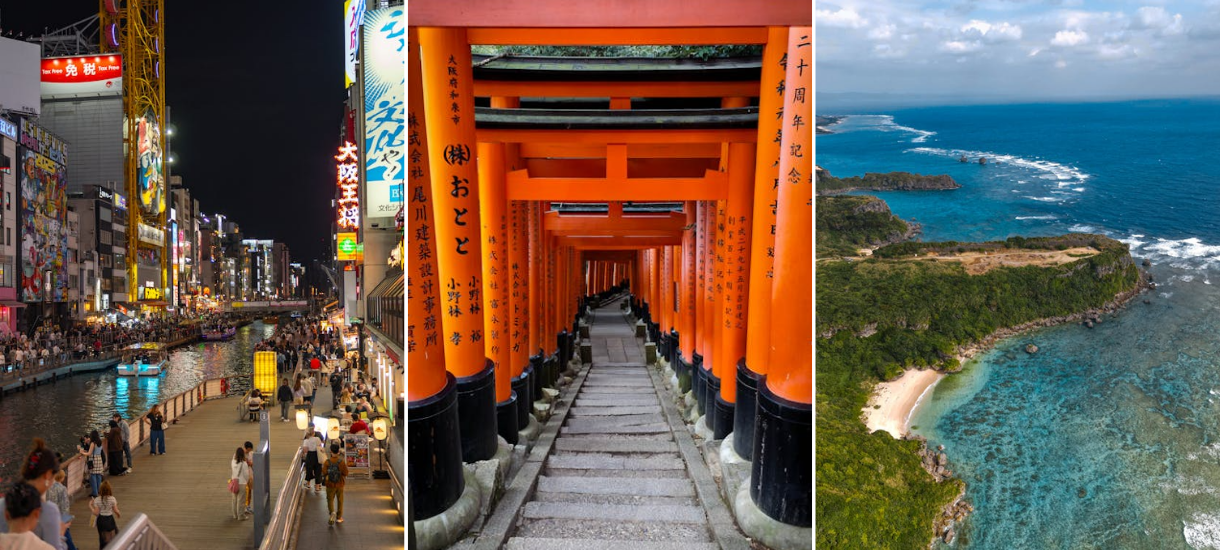
Japan is a country where past meets future, blending ancient Shinto shrines and tea ceremonies with futuristic robot cafes. Tokyo's Shibuya Scramble, Kyoto's bold red Fushimi Inari gates, and Osaka’s neon-drenched canals exert a magnetic pull on travelers from around the world.
Source: Pexels
But here's the thing. These popular destinations are all on just one island. Each of Japan’s five main islands tells its own story, weaving timeless traditions with modern allure. Whether Tokyo's electric pulse pulls you in or Okinawa's chill tropical vibes win you over, this region-by-region guide will help craft your perfect Japan adventure. We’ll make sure you catch the highlights of its most iconic destinations without missing out on the country’s lesser-known treasures.
Understanding Japan's 5 main islands across the country
There are around 14,125 islands in Japan, around 260 of which are inhabited. But the majority of the population lives on the five main islands.
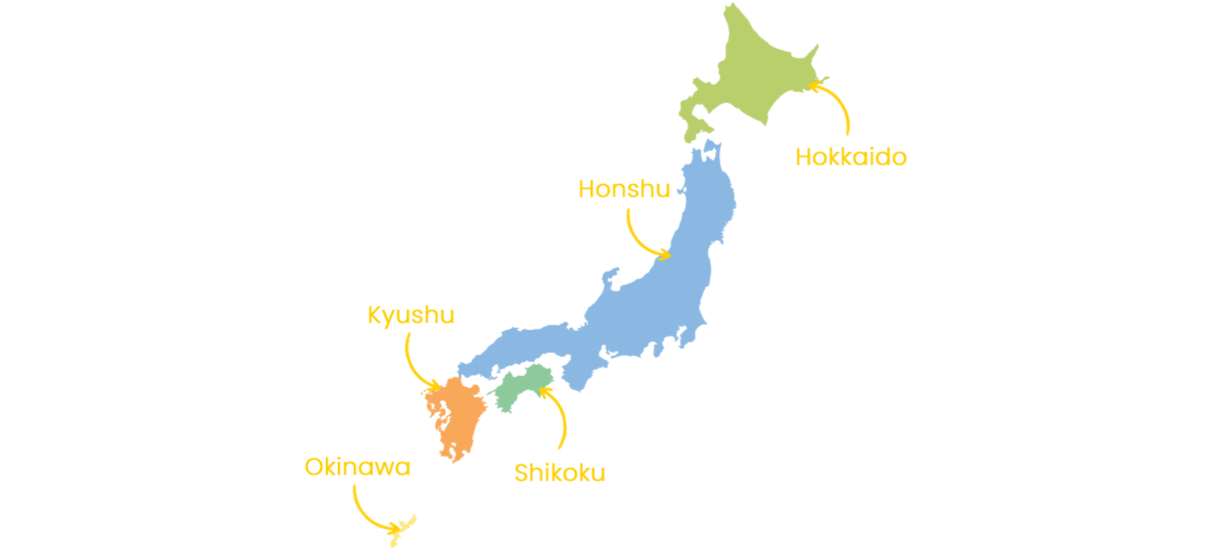
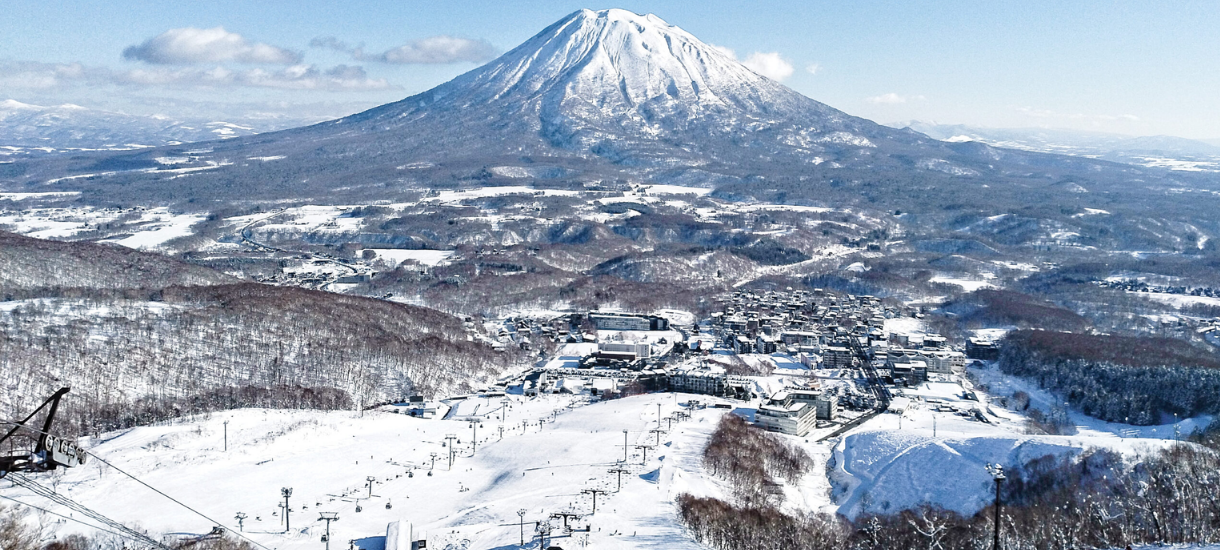
- Hokkaido: The northernmost island of Japan is roughly the size of Austria. On this cold and snowy island, volcanoes form a dramatic backdrop for world-class skiing. Explore the city of Sapporo, dine on local seafood, and discover Ainu heritage.
Source: Wikipedia
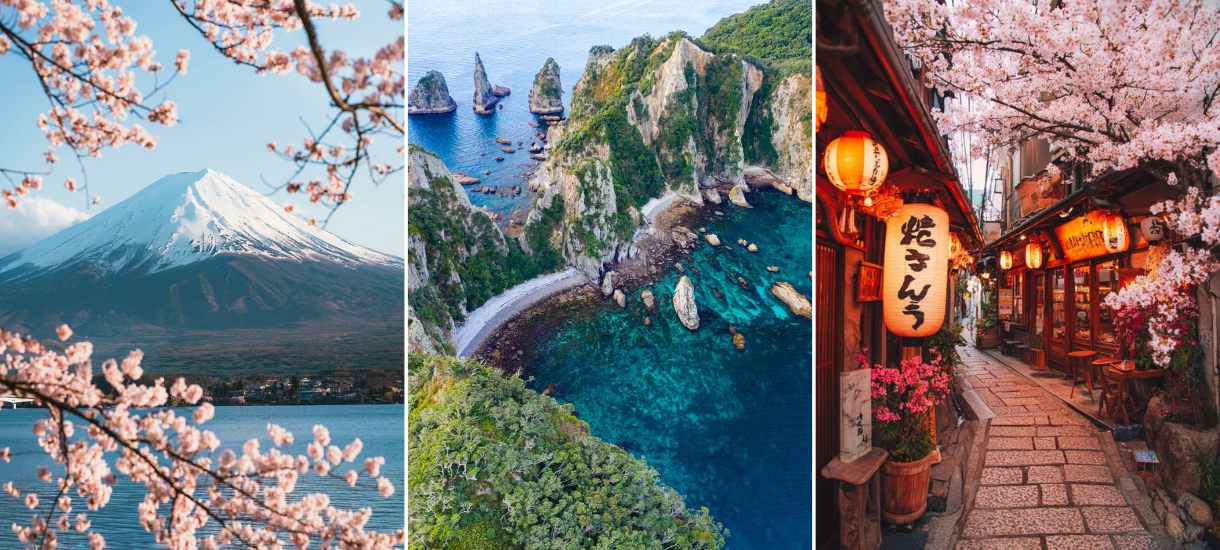
- Honshu: The heartland of Japan boasts its largest and most populous island, Honshu. Around 80% of the country’s population lives on this 227,960 sq km island. It is home to such famous landmarks as Mount Fuji, the cliffs of Tohoku, and vibrant cities like Tokyo and Kyoto.
Source: Printerest
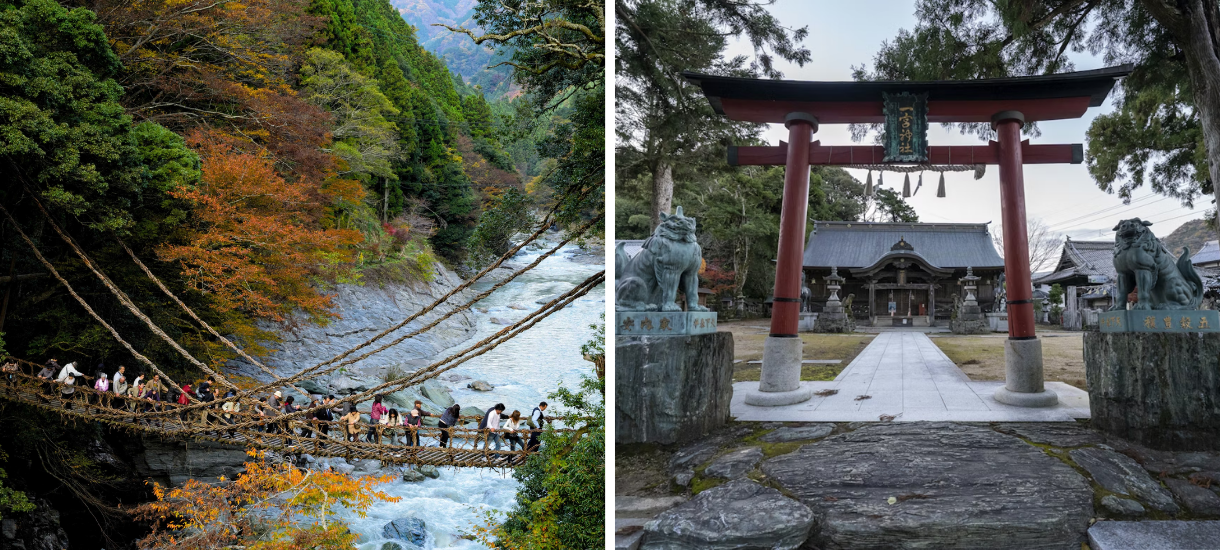
- Shikoku: The smallest of the main islands of Japan is Shikoku, at 18,000 square km. Cross verdant gorges on rope bridges or take a pilgrimage through traditional temples on this island known for its natural beauty and pristine shores.
Source: Wikipedia, Unplash
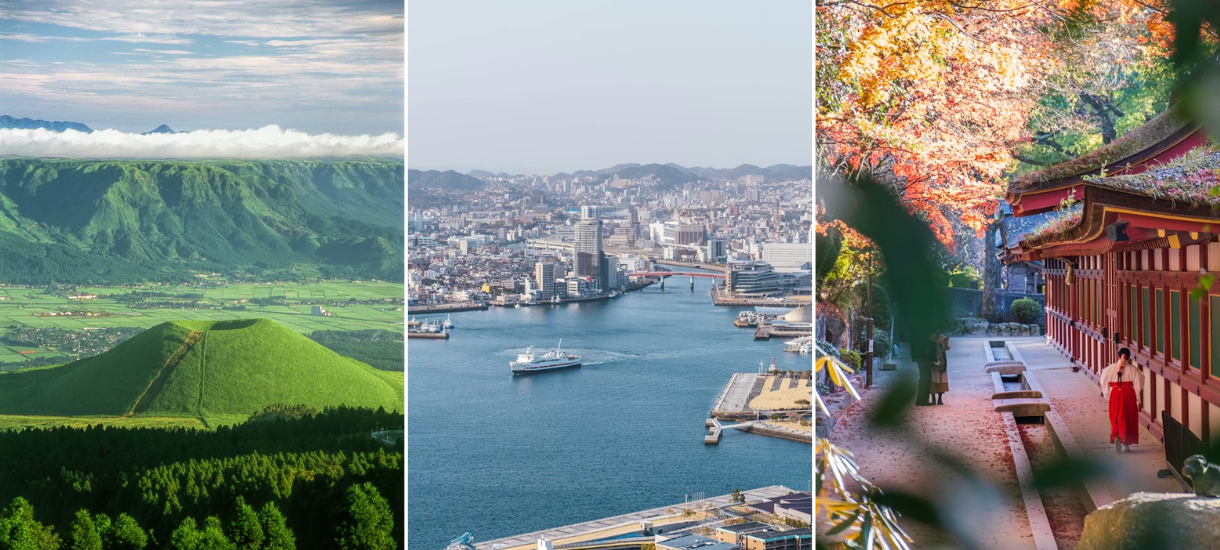
- Kyushu: This southern island is the closest of all the main islands to mainland Asia. Explore Mount Aso, hot springs and volcanic lakes, as well as lively cities like Nagasaki and Fukuoka.
Source: Unplash
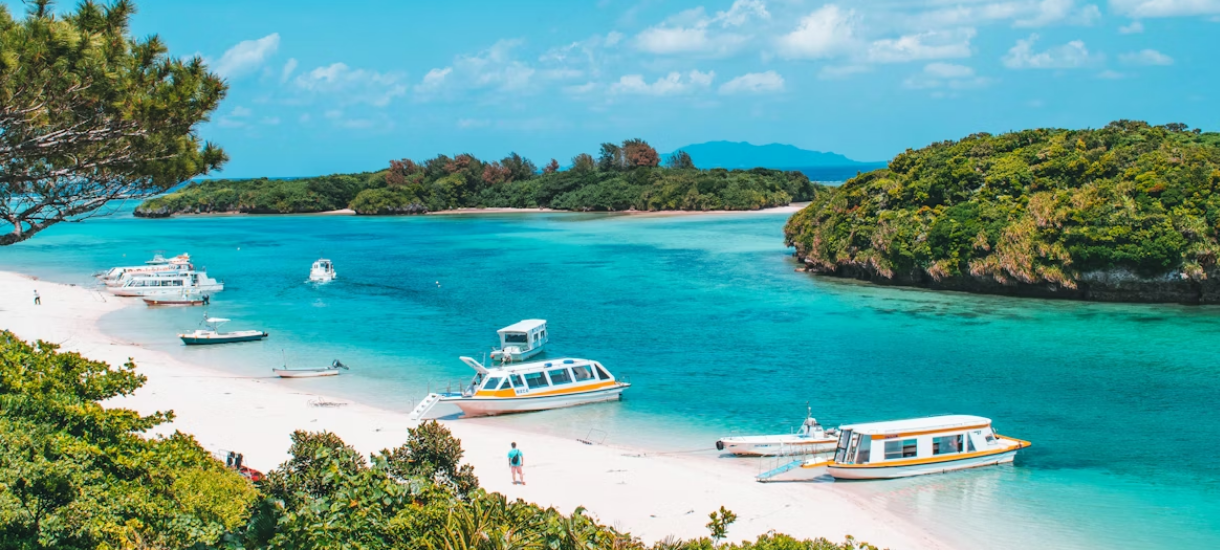
- Okinawa: This little island in the Ryukyu Islands is over 1,000 km from mainland Japan. It immerses you in a distinctive local culture, tropical foliage, white sand beaches, and spectacular coral reefs just off the coast.
Source: Unplash
Best places to visit in Japan by region
Let’s take a look at some top stops to add to your itinerary in each of these regions of Japan.
1. Honshu
Tokyo
Best known for: Neon-soaked city streets, a fusion of past and future
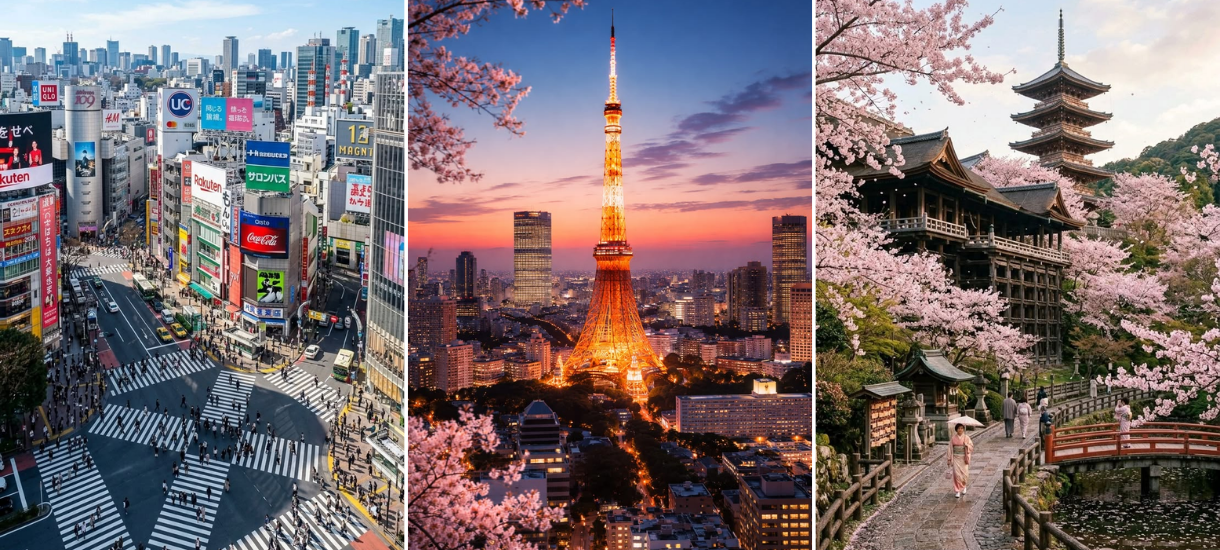
Tokyo’s one-of-a-kind vibe is like an electric beacon drawing travelers from around the globe. As you pass under towering skyscrapers in the glow of neon lights and giant screens, it will feel like you have stepped into the future. But you can also wander down lantern-lined streets that make you feel like you’ve gone back in time.
Source: Printerest
This city, the third largest in the world, has it all. Sing karaoke in Shinjuku, shop the Harajuku fashion district for eclectic street wear styles, or go to the top of the Tokyo Skytree to behold the spectacular glittering panorama of the city. Eat ramen or sip cocktails in atmospheric hidden bars, or marvel at immersive art installations.
Kamakura
Best known for: Great Buddha statue and shogun-era Zen temples
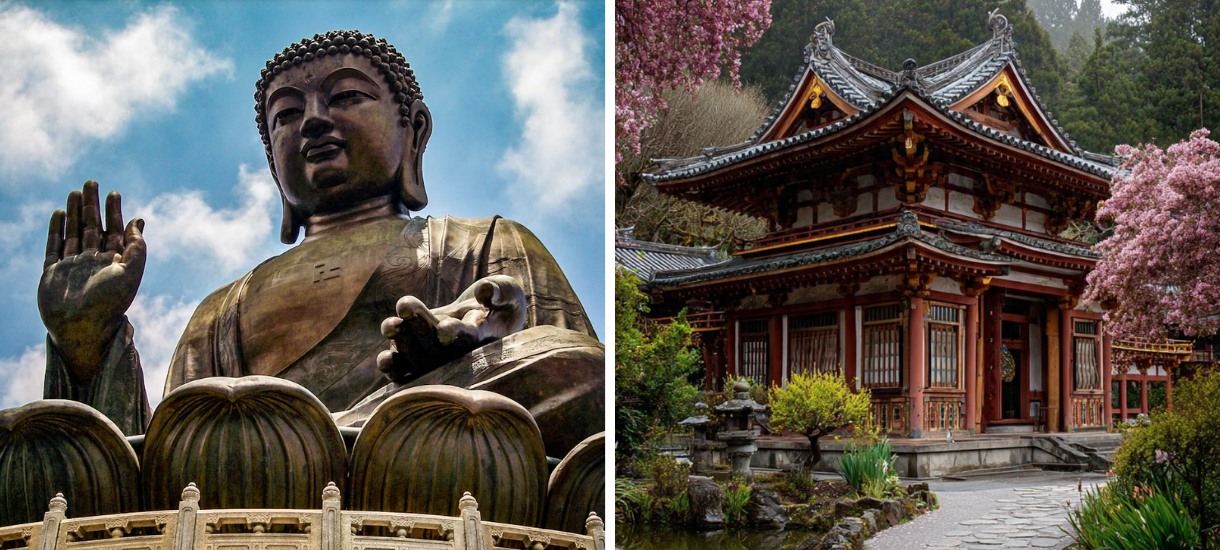
Escape the crowds of Tokyo for the seaside calm of Kamakura. Serenity suffuses every inch of this town, whether you’re hiking a forested trail to Kencho-ji, the oldest monastery in Japan, watching the sunset at Yuigahama Beach, or being awed by the craftsmanship of the 13-meter-tall Great Buddha at Kotoku-in. Be sure to shop for souvenirs and refreshments at Komachi Street before you head out.
Source: Unplash, Printerest
Mount Fuji
Best known for: The iconic shape of its peak in photos
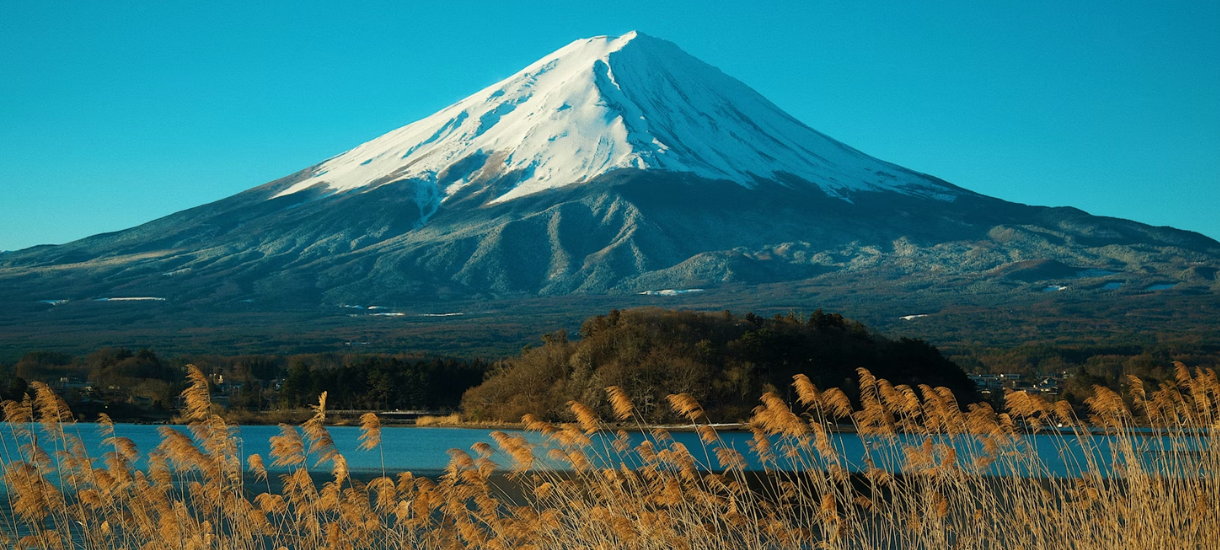
Mount Fuji, called “Fujisan” in Japanese, is one of the most recognizable volcanoes in the world. Its snow-capped peak makes a majestic backdrop for fields, gardens and pagodas. For centuries, the volcano has called to pilgrims from Japan and beyond, who honor it as a symbol of the cycles of death and rebirth. Shrines at the foot of the mountain and pilgrimage paths to the top await those who are ready to take the sacred journey to the summit.
Source: Unplash
Kyoto
Best known for: More than 1,600 Buddhist temples, plus over 400 Shinto shrines.
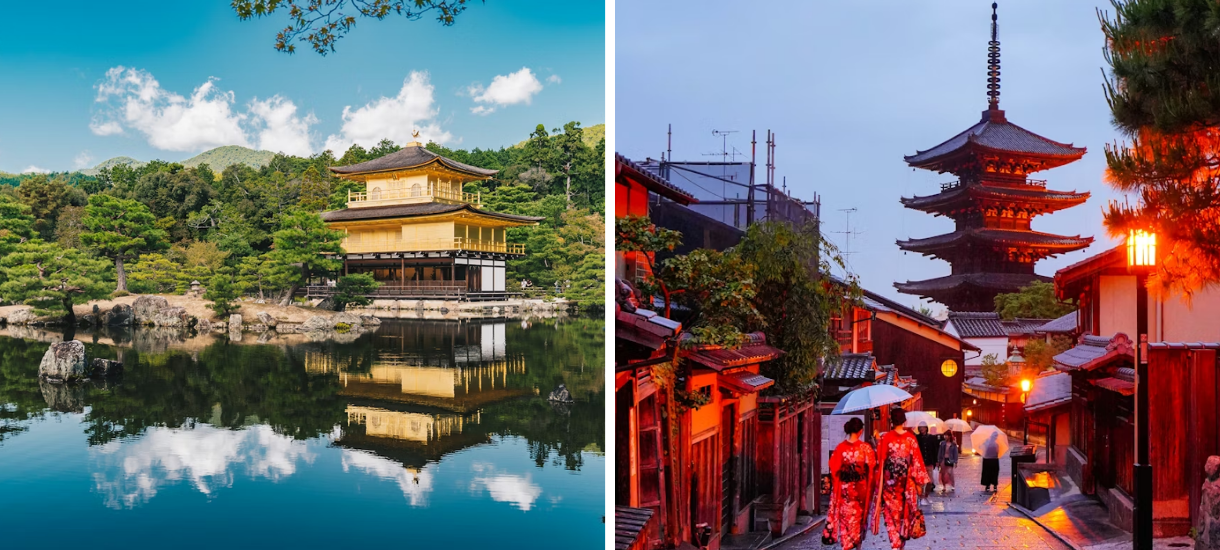
After Tokyo, Kyoto may be the most famous city to visit in Japan. Spirituality weaves through its streets as well as the surrounding misty forests. Marvel at the golden Kinkaku-ji temple pavilion, or walk under thousands of vermilion torii gates at the Shinto shrine Fushimi Inari. Later, you can stroll the lantern-lit alleys of Gion, where geishas carry on the traditions of centuries at ochaya teahouses.
Source: Unplash
Osaka
Best known for: the ‘culinary capital’ of Japan.
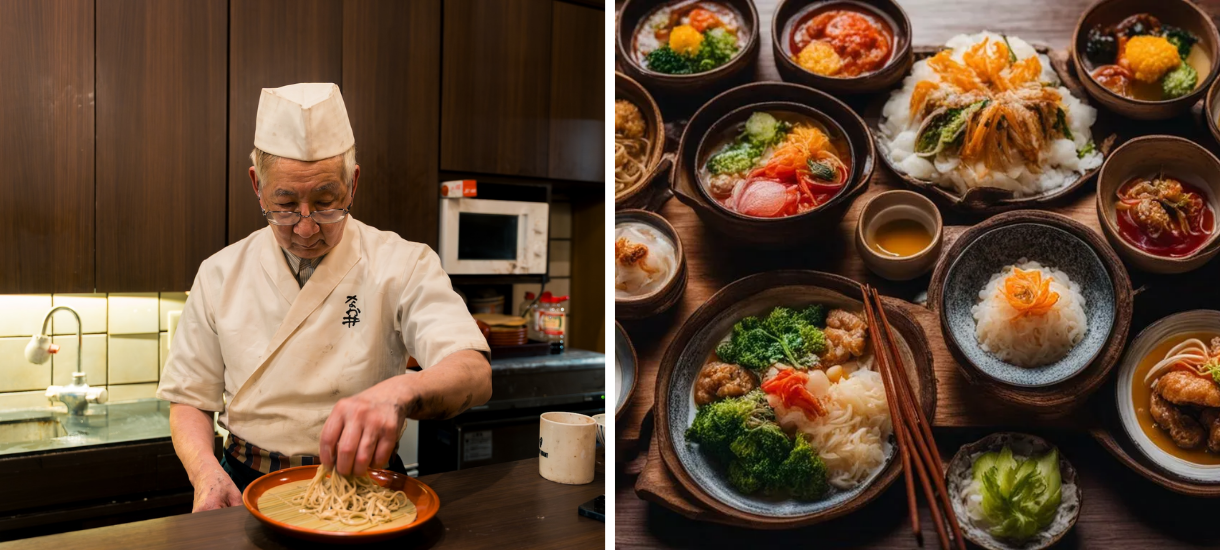
Delight your senses in Osaka. Visit Dotonbori, where colorful neon reflects in the waters of the canal, and you can soak in a futuristic atmosphere. For the best view of the city, ascend to the top of the 300-meter-high Abeno Harukas skyscraper. While in Osaka, you should also consider visiting Kaiyukan Aquarium, Universal Studios Japan’s Super Nintendo World, or the area’s most famous historical landmark, Osaka Castle.
Source: Culinary Backstreets, zenDine
Hiroshima
Best known for: WWII history, the Atomic Bomb Dome, and the Peace Memorial Park
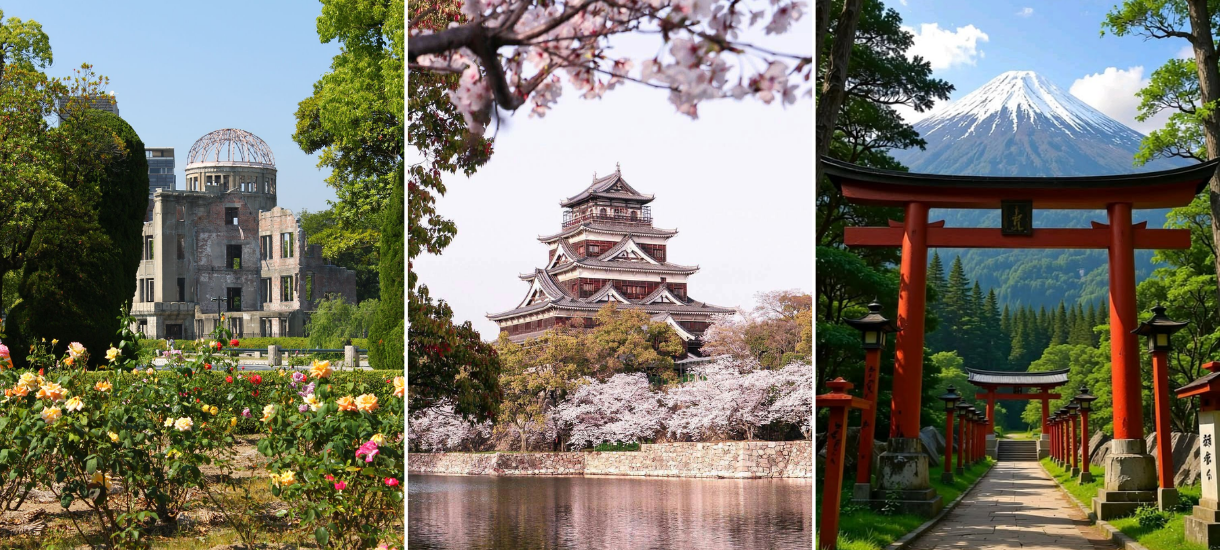
The WWII bombing of Hiroshima still haunts its streets. Visit the Hiroshima Peace Memorial, also called the Atomic Bomb Dome, to see the only structure still standing that was close to the atomic bomb’s hypocenter in 1945. While it is a somber spot, it is also a peaceful one. Spend a few moments in contemplation before continuing on your itinerary.
Next, pay a visit to the Hiroshima Castle, which was reconstructed in 1958 after the bomb destroyed it. Then, ride a ferry to Itsukushima Shrine on Miyajima Island to see the world-famous “floating” torii gate that is featured in so many photographs and postcards.
Source: Printerest
Kanazawa
Best known for: Kenrokuen Garden and historical districts
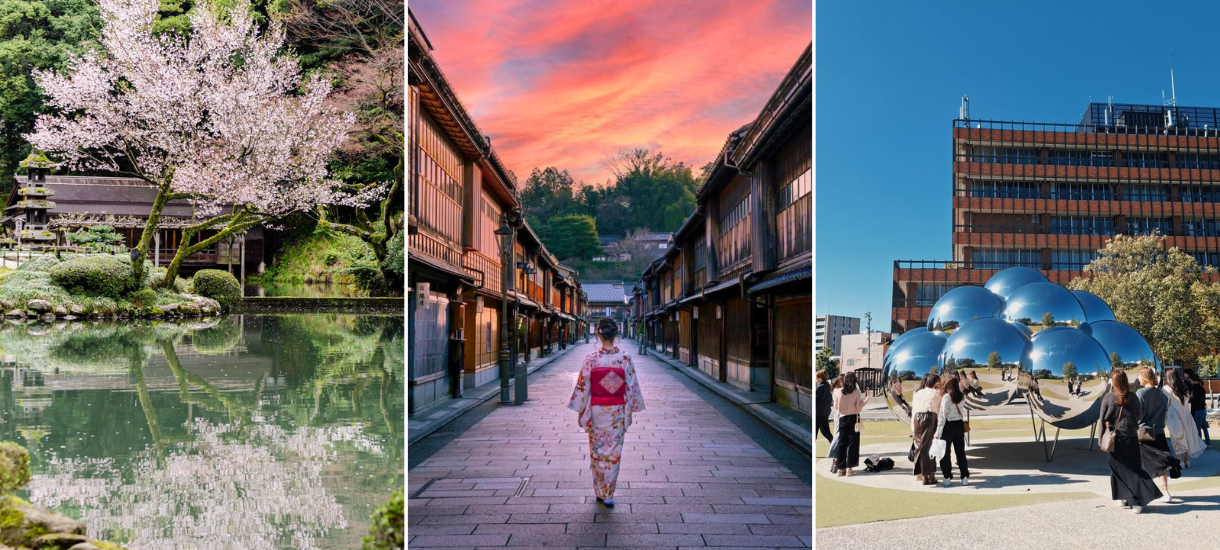
Sometimes Kanazawa is described as a “Little Kyoto.” Like Kyoto, it offers a contemplative atmosphere that is steeped in history. Its crowning jewel is the 17th century Kenrokuen Garden, where you can wander among Japanese maples and cross bridges over peaceful ponds. Other places to visit include Higashi Chaya District, a geisha district dating back to the Edo period, Kanazawa Castle, and the 21st Century Museum of Contemporary Art.
Source: Printerest
Nara
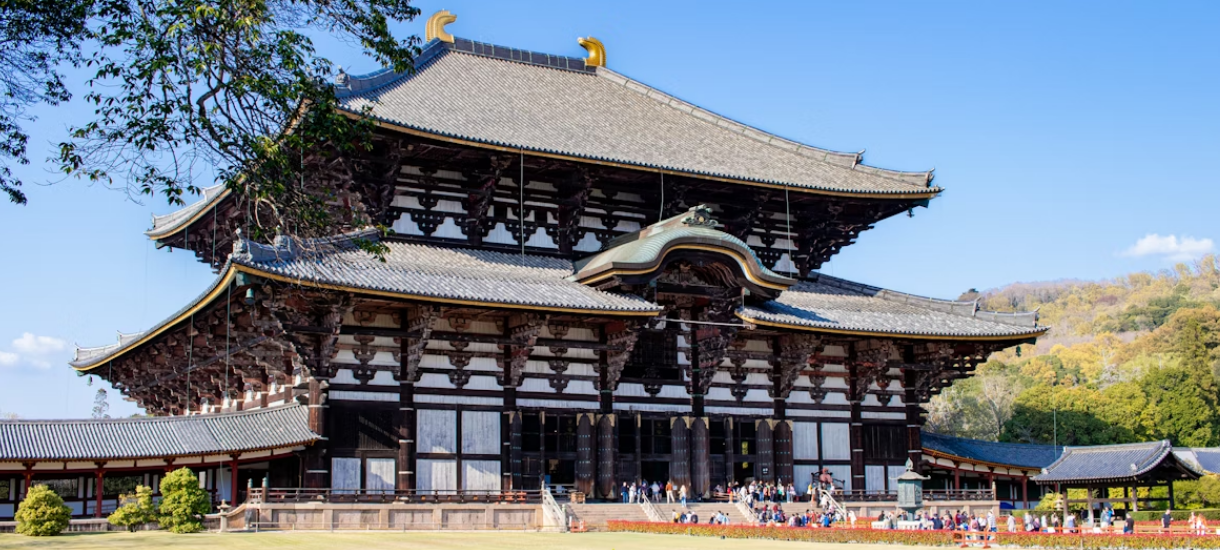
Best known for: Great Buddha at Todaiji, free-roaming deer
Few experiences are as uniquely enchanting as exploring Nara, once the capital of Japan. The Kasuga-taisha Shinto shrine with its exquisite architectural details and the Great Buddha statue at Todaiji Temple carry the city’s spiritual legacy through the centuries.
Source: Unplash
But what many travelers remember most about Nara is the approximately 1,200 wild sika deer that roam freely through Nara Park. They are considered sacred and classified as a national treasure. Buy some crackers at the park to feed these gentle animals.
2. Hokkaido
Sapporo
Best known for: The annual Snow Festival and skiing
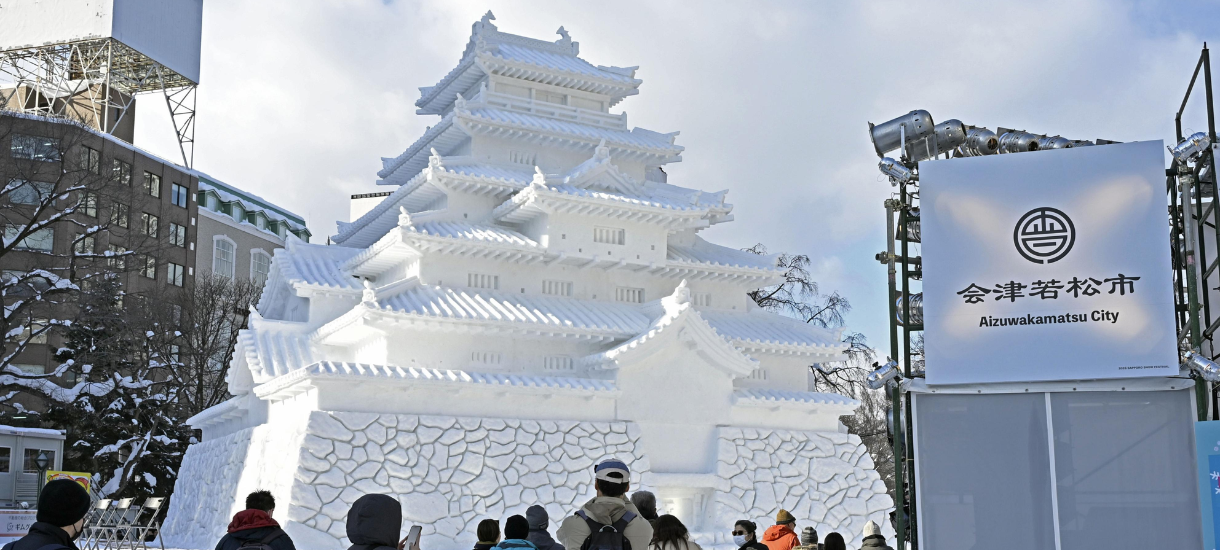
Each February, travelers from around the world flock to Odori Park in Sapporo. Massive, elaborate ice sculptures of palaces, samurai, animals, and characters from pop culture transform the park into a winter wonderland bathed in the glow of colorful lights. Sapporo’s snow also turns the Niseko slopes several hours away into a skier or snowboarder’s dream, complete with the picturesque Mount Yotei for a backdrop. The area’s unique dry powder is known as “Japow”. When you’re ready to get out of the cold, head to any of the city’s restaurants for a hot bowl of ramen.
Source: Kyodo News
Hakodate
Best known for: Views from Mount Hakodate, fresh seafood
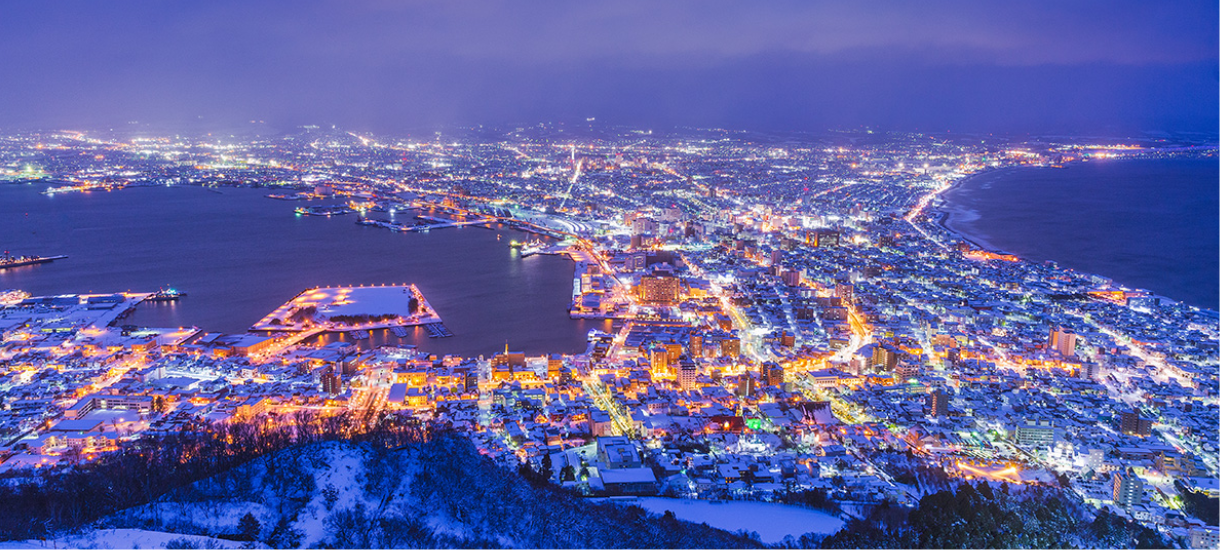
If you have just a few hours in Hakodate, take the ropeway or bus up to the top of Mount Hakodate. At the top, you’ll see expansive views of the city. It’s stunning at any time of day, but many people prefer heading up after dark to see the city lights spread out below.
Source: Shutterstock
Other sites worth visiting include Fort Goryokaku, Onuma Park, and Matsumae castle town. And don’t forget to drop by the morning market for some fresh seafood to start your day.
Asahikawa
Best known for: Daisetsuzan National Park, Asahikawa Museum of Sculpture, shoyu ramen
No matter what time of year you visit Asahikawa, this highland city is enchanting. You can ski at Miyagi Zao Sumikawa Snow Park in winter, or stroll among the cherry blossoms of Tokiwa Park in spring. The Asahikawa Museum of Sculpture showcases beautiful sculptures in a range of styles from classical to modern under a colourful stained glass dome.
Source: Wild
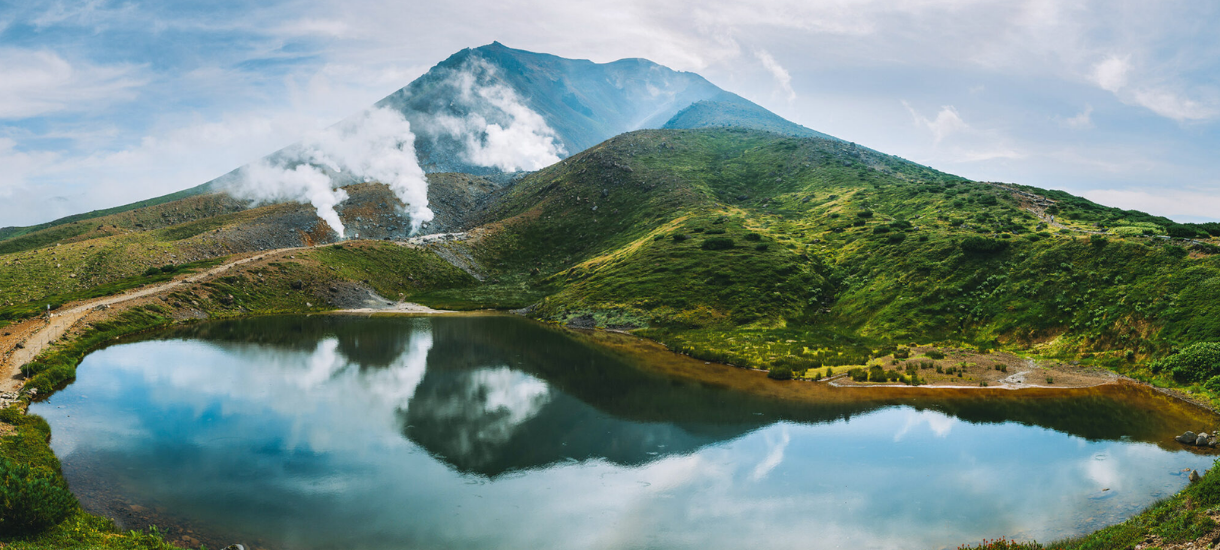
This city is also the gateway to Daisetsuzan National Park, an alpine wilderness area where snowy volcanic peaks rise above deep turquoise hot springs. Discover hundreds of species of alpine plants in summer, or ski or marvel at ice waterfalls in winter. Head back to Asahikawa for a warm bowl of noodles at Asahikawa Ramen Village at the end of a day of hiking or skiing.
3. Shikoku
Kochi
Best known for: Kochi Castle, coastal vibes
Where the Shimanto River meets the sea, you’ll find the city of Kochi, presided over by the Kochi Castle. A visit to the castle is like a trip back in time. It is one of just twelve castles in the whole country that still has its original main keep intact. If you’re lucky enough to visit in spring, you can walk under the cherry blossoms in the castle gardens. Other things to do in Kochi include shopping at the bustling Hirome Market or canoeing under the vine bridges of the Shimanto River.
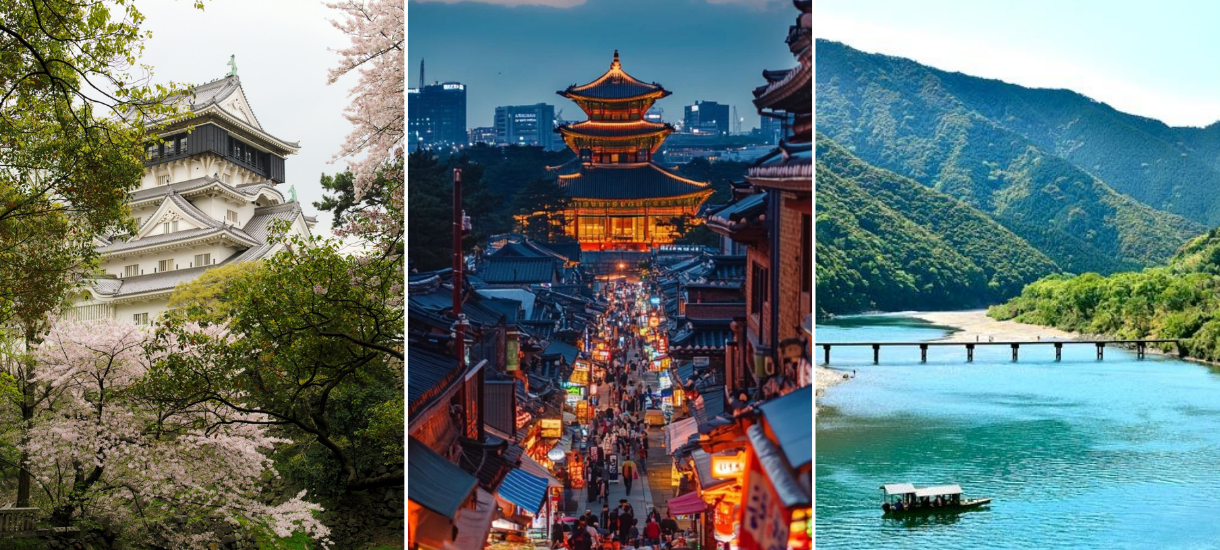
Source: Printerest
Ehime
Best known for: Dogo Onsen's bathhouses, Matsuyama Castle, and the scenic Shimanami Kaido bridge route
For stunning views from the keep of another historical castle, visit the northwestern prefecture of Ehime. There, Matsuyama Castle presides over coastal shores. Those feeling adventurous can cycle all or part of the 70-kilometer bicycle route that crosses over the Shimanami Kaido toll road, bridging six islands on the way to Hiroshima. Returning to Ehime, unwind at Dōgo Onsen Honkan, the atmospheric 19th century bathhouse that inspired Spirited Away.
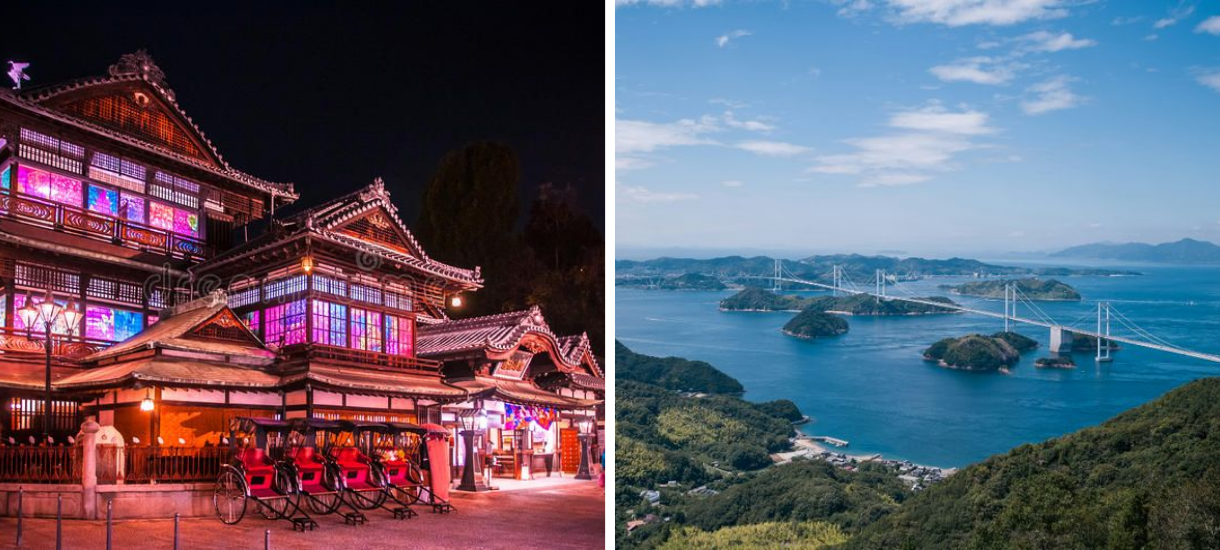
Source: Printerest
Tokushima
Best known for: Awa Odori dance festival and the Naruto Strait whirlpools
If you’ll be in Japan during August, try to attend the Awa Odori dance festival at Tokushima. This festival draws over 1.3 million revelers from Japan and around the globe, making it the country’s largest dance festival. Marvel at the synchronized dances, colorful obon costumes, and powerful drum beats of the performers on parade.
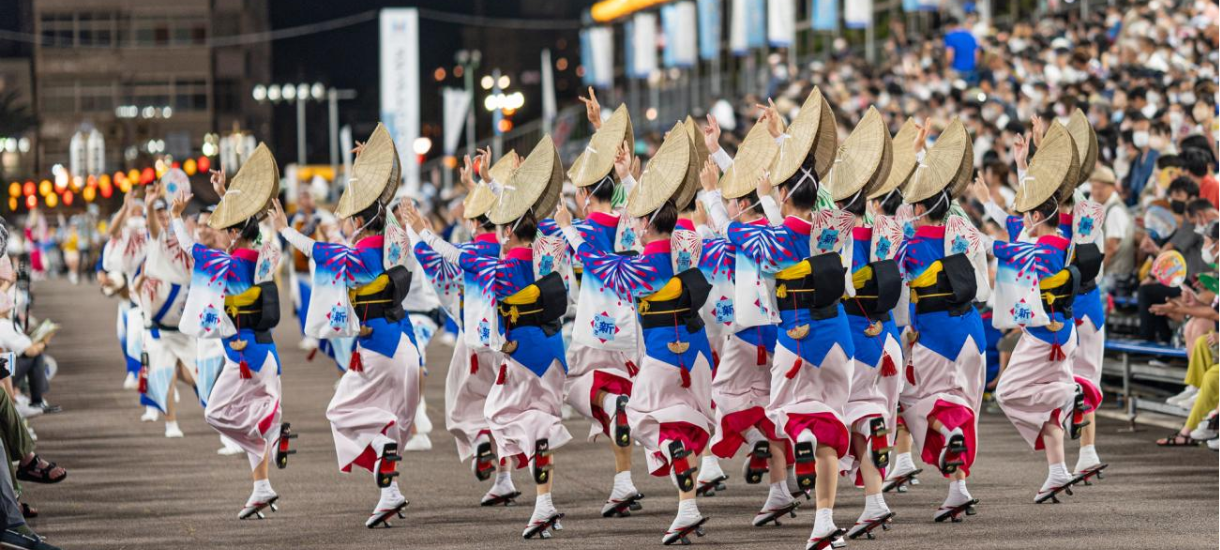
Source: Rakuten Travel
For another local adventure, hop onboard a sightseeing boat and venture to the Naruto Whirlpools, where the currents spin at up to 20 km/h. The whirlpools form multiple times a day, and can get up to 30 meters wide.
Kagawa
Best known for: Ritsurin Garden, chewy Sanuki udon noodles, and art galleries
The coastal community of Kagawa invites you to explore contemporary art at the Chichu Art Museum and dine on the area’s local specialty, a type of chewy, thick udon known as Sanuki. The most iconic attraction, however, is the 75-hectare Ritsurin Garden. More than a hundred years of work went into its creation, culminating in 1745. Walk under the shade of pine trees, crossing over delicately arcing bridges across half a dozen ponds among 13 artificial hills sculpted to make every view worthy of a painting or a postcard.
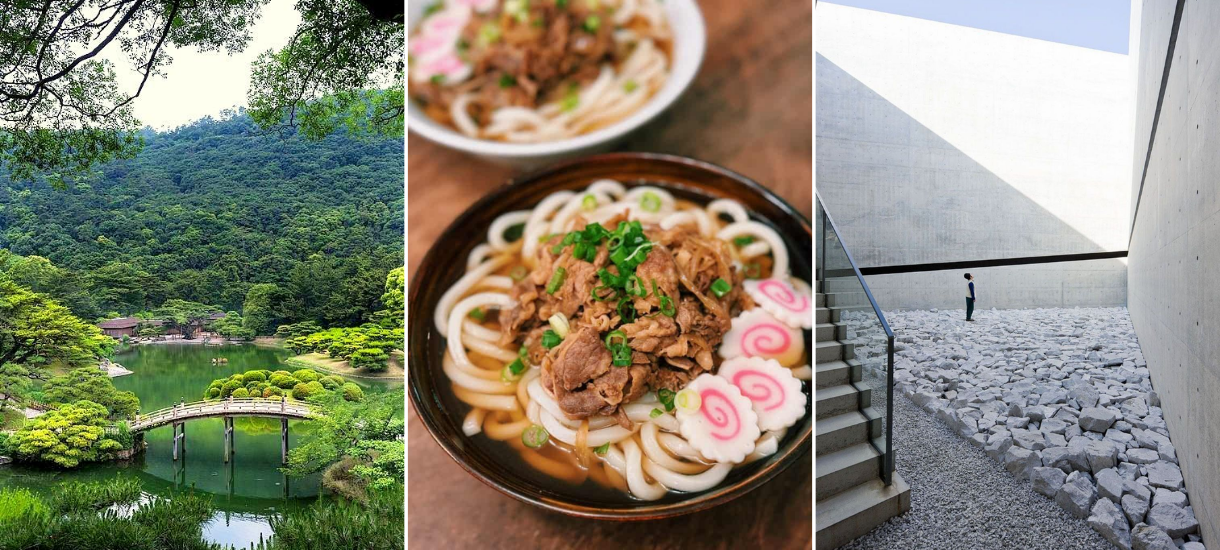
Source: Printerest
4. Kyushu
Fukuoka
Best known for: Culinary delights like Hakata ramen, plus parks, shrines and modern skyscrapers
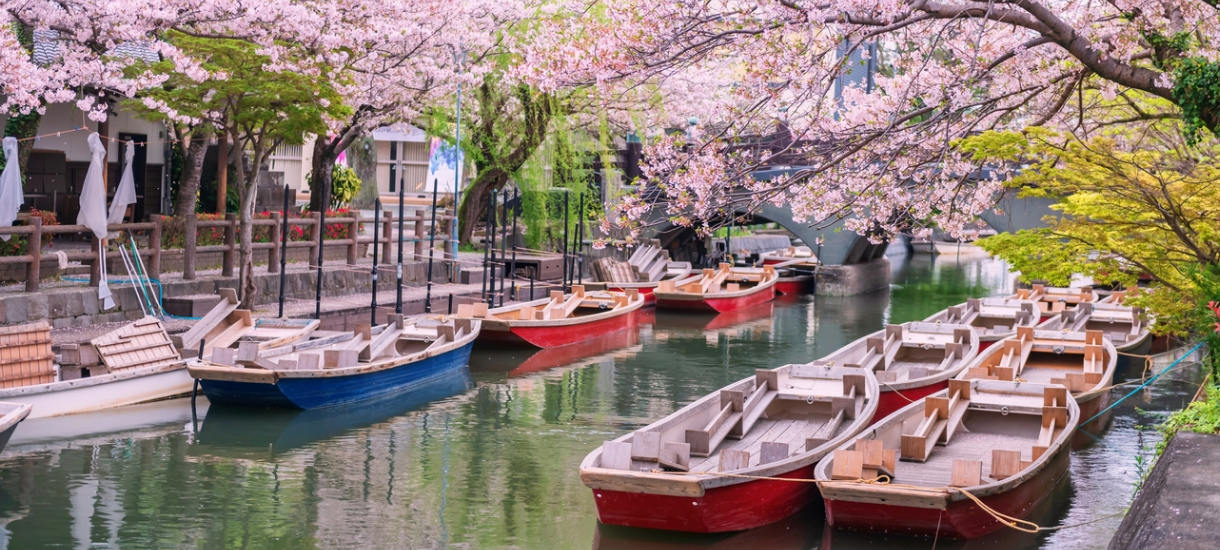
Fukuoka offers the perfect blend of new and old. Ascend to the top of the sleek Fukuoka Tower skyscraper for views of the city lights, or visit the oldest shrine in the city, Kushida Shrine, where you can see a thousand-year-old gingko tree or attend the Hakata Gion Yamakasa festival of floats in July. Watch graceful swans at Ohori Park, and dine on steaming Hakata ramen at a riverside yatai stall in the evening.
Source: Shutterstock
Nagasaki
Best known for: WWII atomic history
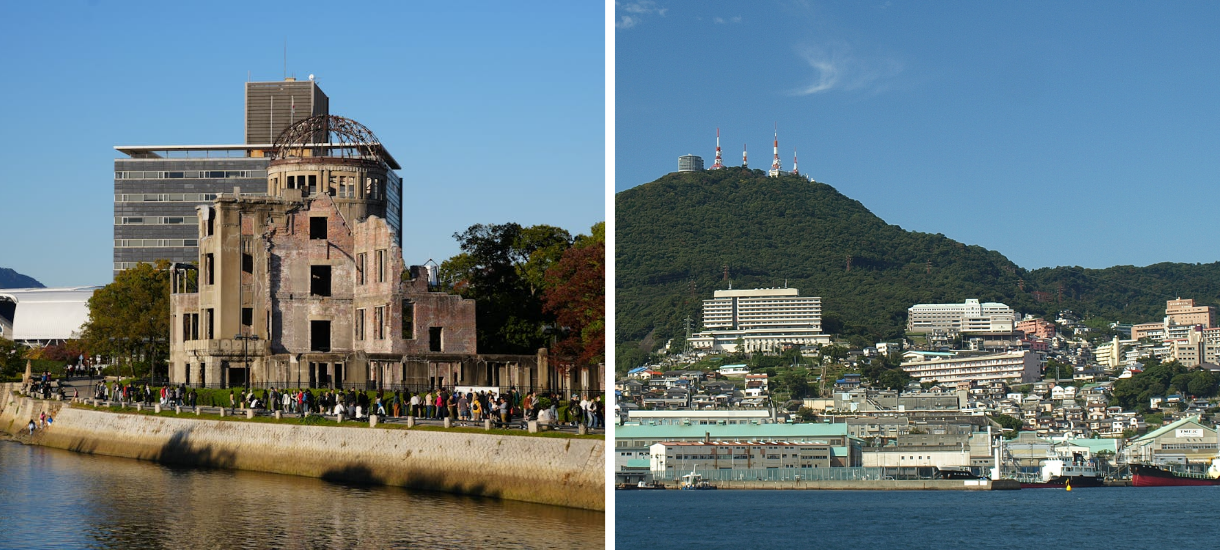
The shadow of WWII looms over Nagasaki. Spend some time at the Atomic Bomb Museum and Peace Park to learn about the devastation from the atomic bomb dropped in 1945. If you need to step back a bit after visiting the blast site, you can get some perspective on the present by ascending Mount Inasa. There, you can see a spectacular view of modern, thriving Nagasaki. The night views are especially stunning with the city lights like stars below.
Source: Pexels, Wikipedia
Oita
Best known for: Thermal pools, bathhouses
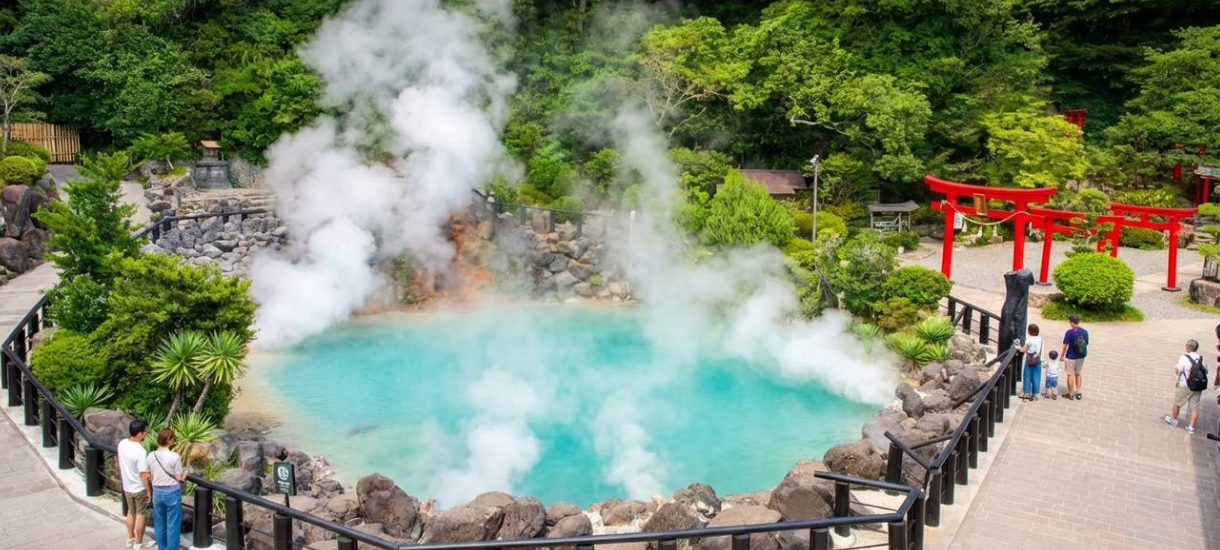
Beppu’s Eight Hells may have an intimidating name, but these colorful hot springs in the Oita prefecture are heavenly to look at. The experience of relaxing in a warm sand bath or hot spring at one of Oita’s local bathhouses is also divine. And don’t miss out on one of Japan’s most unique culinary experiences, Jigoku Mushi, or “Hell steaming.” You rent a steam pot, and cook local ingredients over a volcanic vent, infusing your food with natural minerals and a distinctive flavor you won’t find anywhere else.
Source: Klook
5. Okinawa
Best known for: Ryukyu culture, white sand beaches, coral reefs
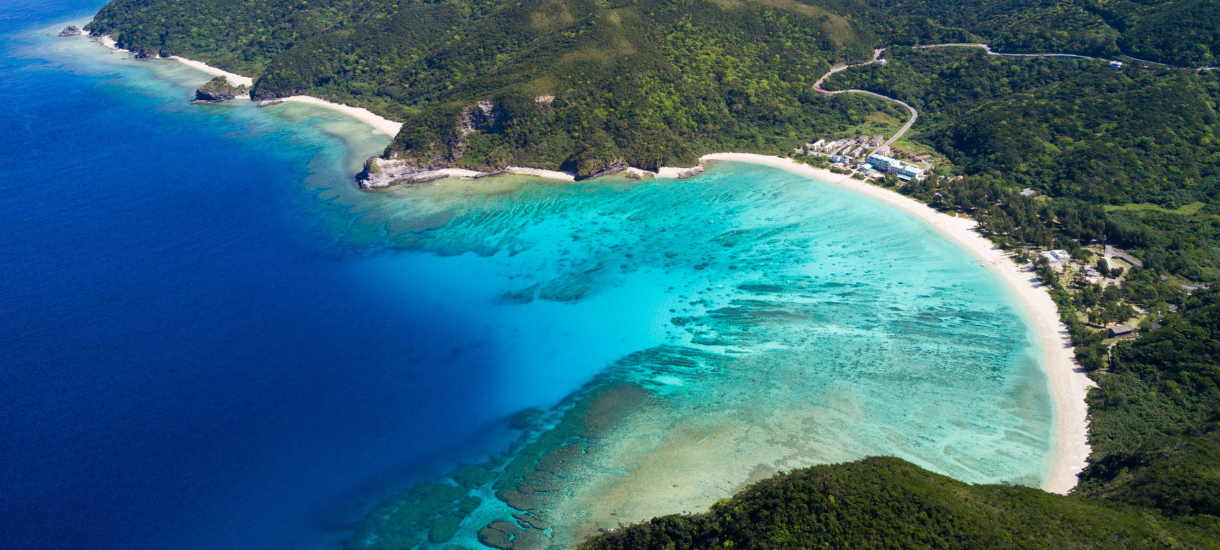
This tropical island draws snorkeling enthusiasts to explore its coral reefs and swim with manta rays and sea turtles. Relax on a sandy beach, indulging in the tropical breezes, or visit the white sharks at Churaumi Aquarium. Learn all about the Ryukyu heritage of the island at the colorful, rebuilt Shuri Castle, or at Ryukyu Mura, a recreated Ryukyu Kingdom village cultural park. Okinawa also boasts some lush gardens at sites like the Tropical Dream Center and the Southeast Botanical Gardens. These are well worth a visit, even if they are not among the island’s most famous attractions.
Source: Pelago
FAQ
Best places in Japan for first-timers?
If this is your first visit to Japan, spend time in Tokyo, Kyoto and Osaka for some of the most iconic urban experiences. Nature lovers should take the bus to Lake Kawaguchiko to snap some photos of Mt. Fuji.
When is the best time to visit?
That depends on what you enjoy. Visit in spring if you want to experience the mono no aware of cherry blossoms. Come during summer for festivals and cultural activities. Fall foliage and more temperate weather makes autumn a lovely time to visit. Winter is ideal for ice sculptures and skiing. Discover what every season in Japan offers.
What are the best "off the beaten path" regions?
Kyushu, Okinawa, and Hokkaido are all excellent off-the-beaten-path regions. They will get you away from the crowds of tourists, while rewarding you with unforgettable experiences.
What is the most beautiful part of Japan?
Japan’s beauty takes many forms, from the bamboo groves and ancient temples of Kyoto to the volcanic slopes and alpine wildflowers of Daisetsuzan National Park in Hokkaido. Explore Japan on a personalized tour to experience the types of beauty that most appeal to you.
What are the top 5 cities to visit in Japan?
The top 5 cities to visit in Japan include Tokyo, Kyoto, Osaka, Hiroshima, and Fukuoka.