
The Truth About Pad Thai And Other Thai Noodle Dishes Locals Love Even More
Discover the surprising story behind Pad Thai, one of Thailand’s most iconic street foods, and dive into Thai noodle culture with 5 flavorful dishes.
Even if you’ve never set foot in Thailand, chances are you already know Pad Thai. Imagine stepping into any Thai restaurant around the world; most of the time you’ll see this food item located in a respected place on the menu. It has become the icon of Thai cuisine, just like Phở in Vietnam. But the backstory behind its fame might completely surprise you. And when you actually visit Thailand, you’ll discover that Pad Thai isn’t what you think it is. Let's take an honest, practical look at this famous staple—plus a few delicious Thai noodle dishes that locals actually love even more.
1. The Truths About Pad Thai
Pad Thai was born out of a shortage of rice
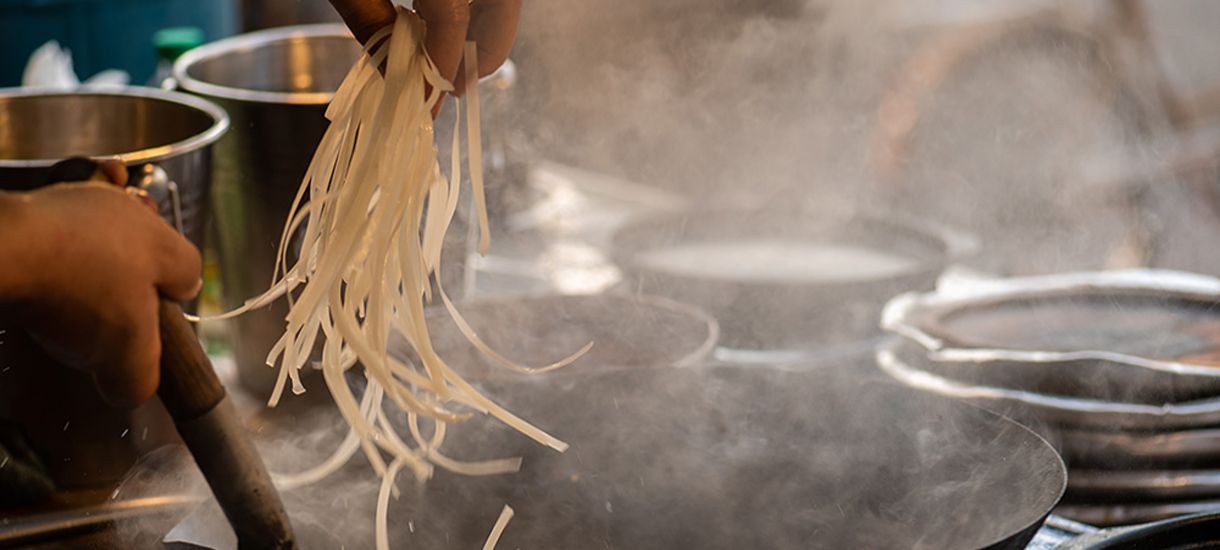
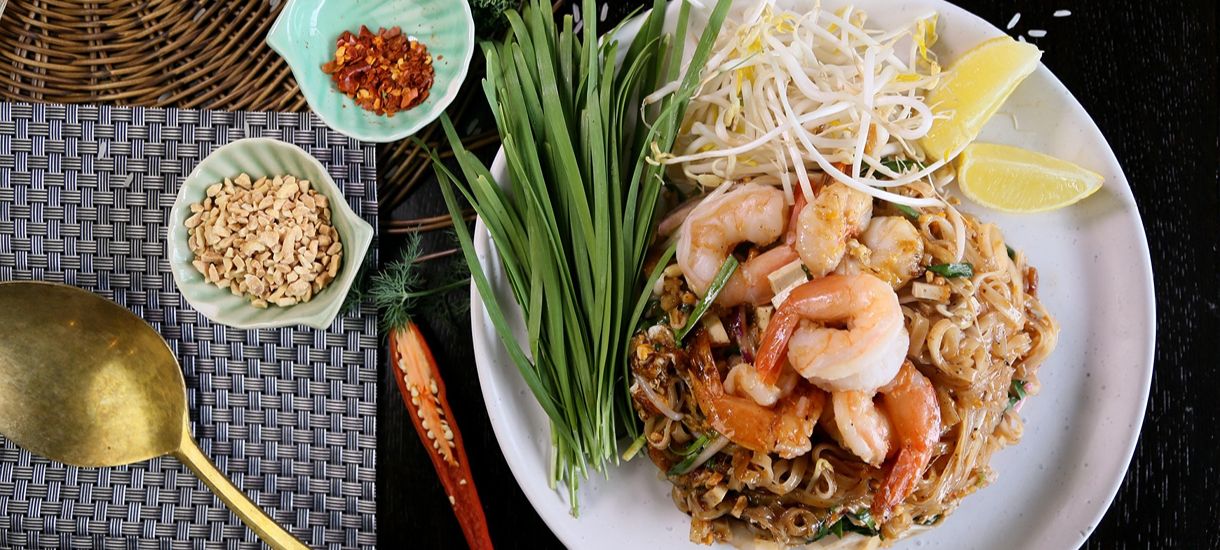
Believe it or not, Pad Thai wasn't passed down by ancient grandmothers; it was created out of sheer necessity! Back in the late 1930s and 1940s, Thailand was hit with WWII hardships and massive flooding that caused a huge shortage of rice. To save the national grain supply, the Thai government urged people to eat rice noodles instead, since making noodles uses way fewer rice grains than serving big bowls of steamed rice. The government created a simple stir-fry recipe and handed out the recipe across the country. What started as a clever way to stretch food ended up feeding a nation. That’s how the very first plate of Pad Thai came to be.
(Source: asianinspirations)
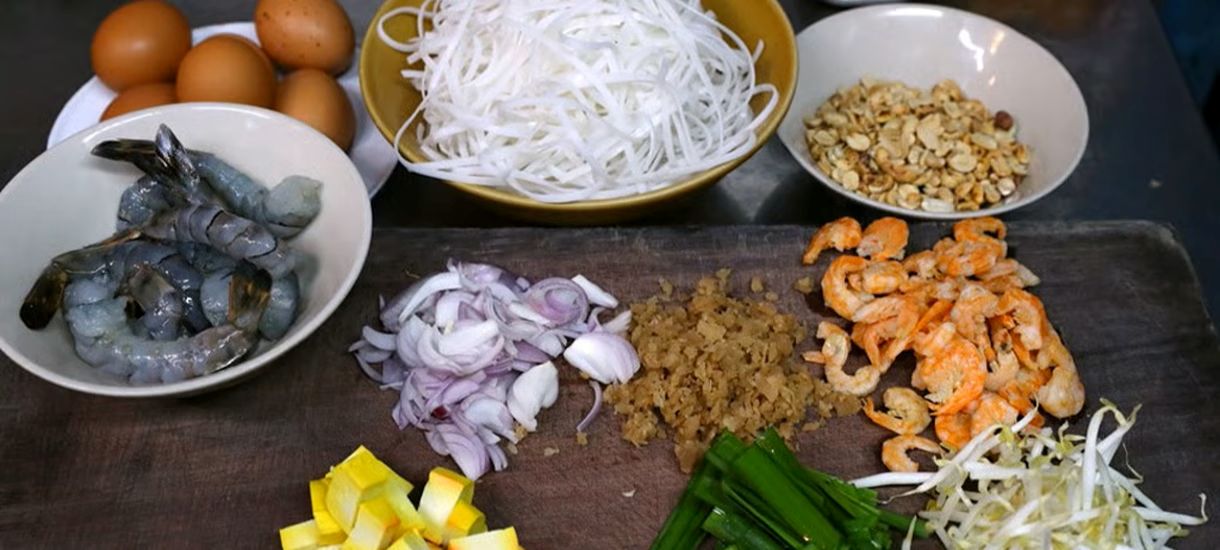
Pad Thai ingredients (Source: scmp)
The Culinary Ambassador for Thai Tourism
If Pad Thai was a wartime fix, then how did it end up in every Thai restaurant in almost every major city around the world? You can actually thank the Thai government for that! In 2002, Thailand launched the "Global Thai" campaign. Instead of just running travel ads, the government literally helped Thai chefs and entrepreneurs open restaurants overseas by offering training, special visas, and big business loans through the Export-Import Bank of Thailand. Pad Thai was pushed as the signature star dish because its gentle mix of sweet, tangy, and nutty flavors hits the spot for almost anyone trying Thai food for the first time. Even though today Thai cuisine is known for its spiciness, Pad Thai has become more approachable to foodies because of its mild and flavorful profile.
Best Eaten on the Street
When travelers touch down in Thailand looking for great Pad Thai, they soon learn a secret: the fancy dining rooms rarely serve the best Pad Thai. The real deal lives on the sidewalk. You'll find the best Pad Thai at mobile pushcarts and bustling street stalls, where vendors flash-fry noodles over a roaring flame in seconds and hand you a steaming plate with a slice of fresh lime and a handful of bean sprouts. It’s fast, loud, messy, and ridiculously tasty.
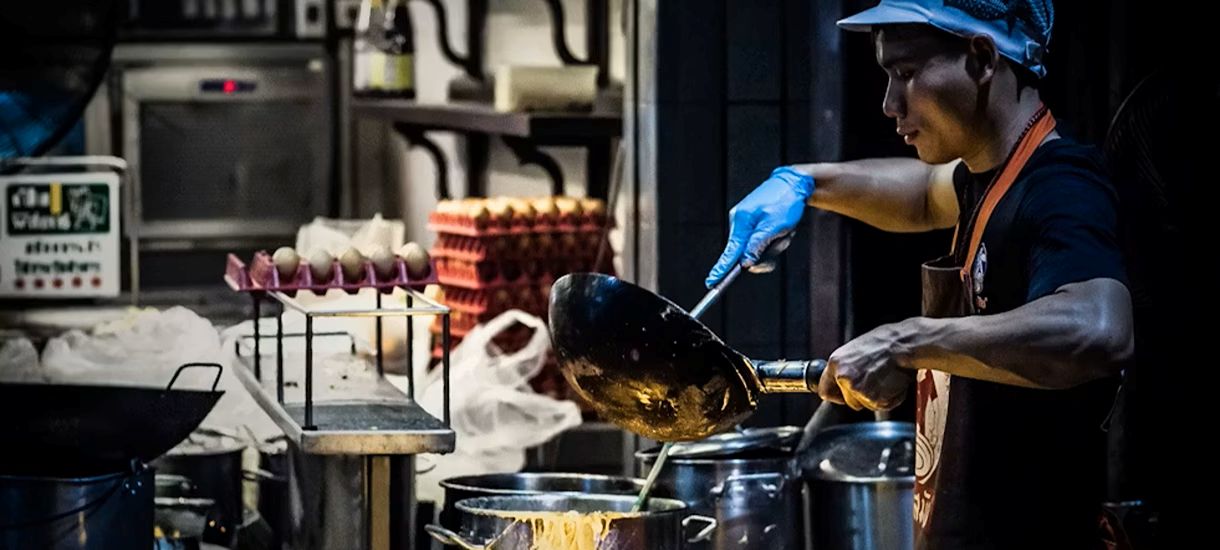
Locals Don’t Eat Pad Thai Every Day
So, do people in Thailand eat Pad Thai for breakfast, lunch, and dinner? Honestly, no! To give a fair look: while locals definitely appreciate a good plate of Pad Thai from a famous night-market cart, it's not an everyday habit for most people. Food comes down to personal craving, and Thai people are blessed with an endless buffet of street food. Pad Thai is just one choice out of dozens on any given street corner. Most of the time, when locals step out for a quick noodle fix, they go for many other options besides Pad Thai, which brings us to the next part!
2. Beyond Pad Thai: The Lesser-Knowns of Thai Noodle Culture
You won't need much convincing to branch out once you arrive in Thailand. The aroma alone will pull you toward the street carts. These noodle dishes we introduce right now can certainly be your first-ever noodles to try in Thailand, not just Pad Thai.
Kuay Teow Reua (Thai Boat Noodles)
Boat noodles have one of the coolest backstories in Thai food culture. Originally sold from small canoes floating along Bangkok's canals, vendors served them in small bowls so they wouldn't spill over choppy waters as they handed them to dockworkers.
What these bowls lack in size, they make up for in massive flavor. Thin rice noodles float in a dark, rich broth seasoned with star anise, cinnamon, and pork or beef bones. It’s traditionally thickened with a splash of seasoned blood, giving it a silky texture and incredible depth. Because the portions are small, it’s super easy if you just wanna try, though don't be surprised if you end up with a stack of empty bowls at your table!
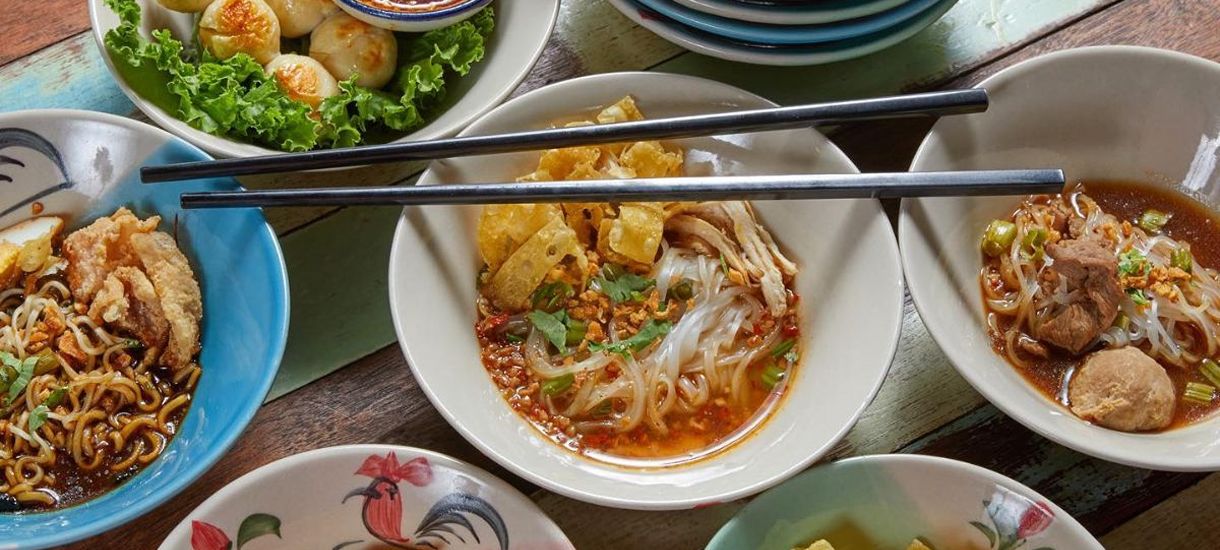
(Source: hungrygowhere)
Pad See Ew
If you’re looking for pure comfort food, Pad See Ew is where it’s at. Made with wide, flat rice noodles (sen yai), this dish gets tossed into a screaming-hot wok with tender pork or chicken, fresh eggs, and crisp Chinese broccoli.
The secret here is ‘wok hei’ – the "breath of the wok", which lightly chars the dark soy sauce, giving every single wide noodle a delightfully smoky, savory coating. It’s simple, satisfying, and
impossible not to love. After Pad Thai, Pad See Ew is also one of the most popular dishes found in any Thai restaurant.
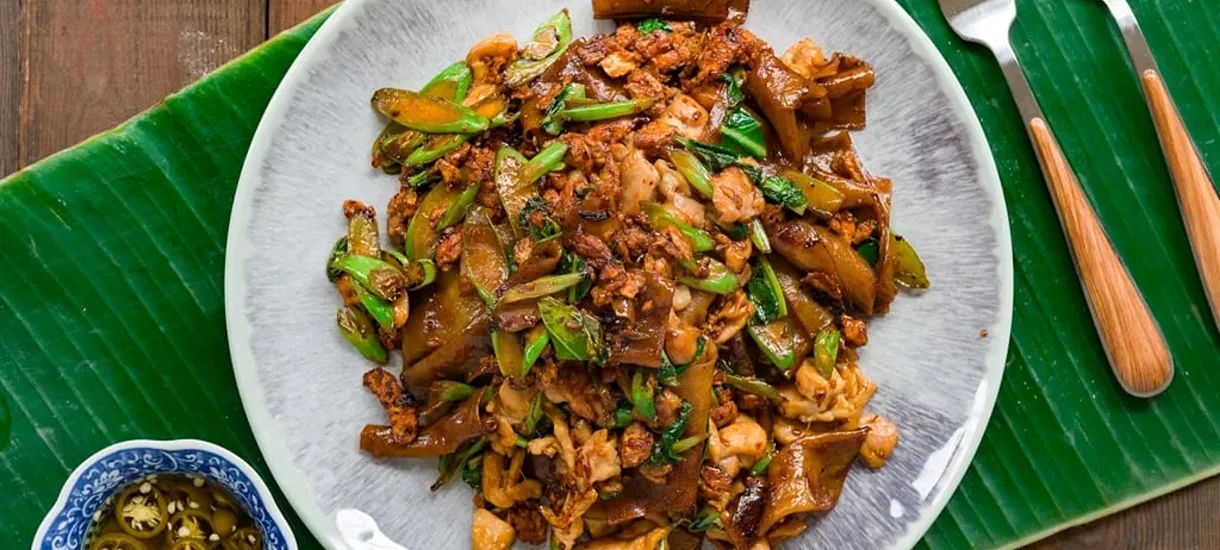
(Source: norecipes)
Khao Soi
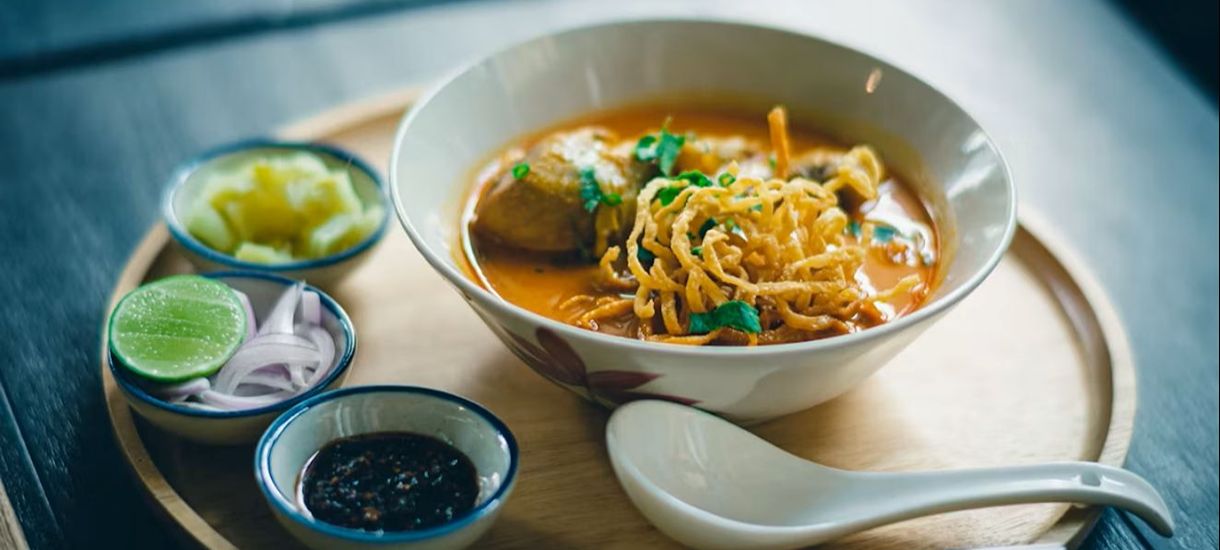
Traveling north to Chiang Mai brings you face-to-face with Khao Soi, a dish that feels more like a warm hug than a simple noodle bowl. Brought to Northern Thailand by Chinese-Muslim traders along historic trade routes, Khao Soi pairs soft egg noodles with a coconut curry broth that is fragrant, mild, and velvety. It is served with a tender chicken drumstick or braised beef, then topped with a nest of deep-fried crispy noodles to create a satisfying contrast of textures. Pickled mustard greens, raw shallots, and a squeeze of fresh lime are served alongside to cut through the richness. This is actually the Thai noodle dish that most of our clients love.
Pad Kee Mao (Drunken Noodles)
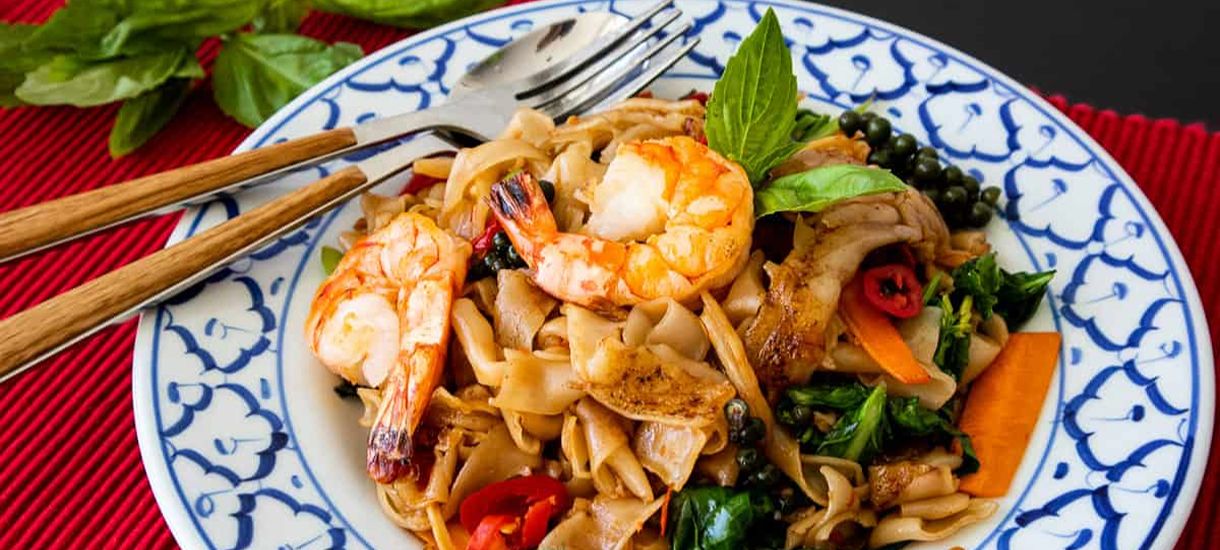
If you crave bold spices and herbal heat, Pad Kee Mao, known universally as Drunken Noodles, will definitely wake up your taste buds. Local legend claims the dish earned its name either because it serves as the ultimate late-night hangover cure or because it is spicy enough to shock anyone who has had a bit too much to drink. Wide rice noodles are tossed over roaring flames with crushed garlic, fresh red chillies, holy basil, and whole clusters of young green peppercorns, creating a savory stir-fry that is herbaceous, fiery, and deeply aromatic.
(Source: hotthaikitchen)
Guay Tiew Tom Yum
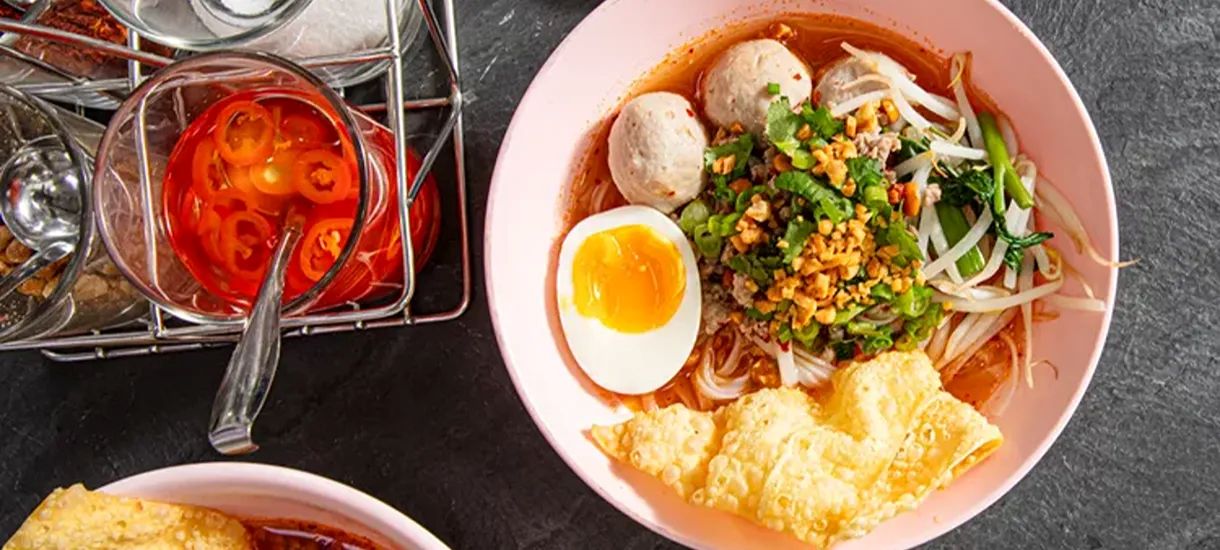
Unlike the world-famous Tom Yum soup served in formal clay pots, Guay Tiew Tom Yum is an everyday street-stall version crafted for noodle lovers. A base of light, clear pork or seafood broth is spiked with fresh lime juice, crushed chilli flakes, fish sauce, and coarsely ground roasted peanuts. The result is a vibrant bowl that hits every corner of the palate at once: sour, spicy, salty, and nutty. Best of all, vendors keep extra seasonings on the table so you can tweak the heat and tang exactly how you like it.
(Source: seriouseats)
Pad Thai may have put Thai noodles on the map, but taking a chance on these local favorites is where the real culinary adventure begins.