
Best Thai Foods for Milder Tastes
Discover the best Thai dishes. These Thai cuisines have broad appeal, including to kids, picky eaters, and travelers who prefer milder flavors.
Thai cuisine is famous for bringing the heat with spicy flavors. Not everybody enjoys spicy foods, however. Thankfully, kids, picky eaters, and people who simply prefer milder flavor profiles are in luck. Many Thai dishes are not that spicy.
In fact, quite a few Thai cuisines feature a balance of ingredients. Sweet, spicy, sour and salty flavors harmonize to create a symphony of taste. Below are some of the best Thai dishes for people who don’t want to feel like their mouths are on fire.
Khao Niao Mamuang (Mango sticky rice)
Let's start the list with something sweet, subtle and refreshing. When April and May roll around in Thailand, it’s mango season, and that means one thing: Khao Niao Mamuang, or mango sticky rice, is everywhere. From street stalls to fancy cafés, this beloved dessert takes over the country one juicy mango at a time.
This traditional dessert is prepared by soaking and steaming glutinous rice to give it a unique chewy texture. The steamed rice is then mixed with coconut milk, salt and sugar and served with mangos. Sometimes toasted sesame seeds or mung beans may top it off. The recipe is always drizzled with some thickened coconut sauce.
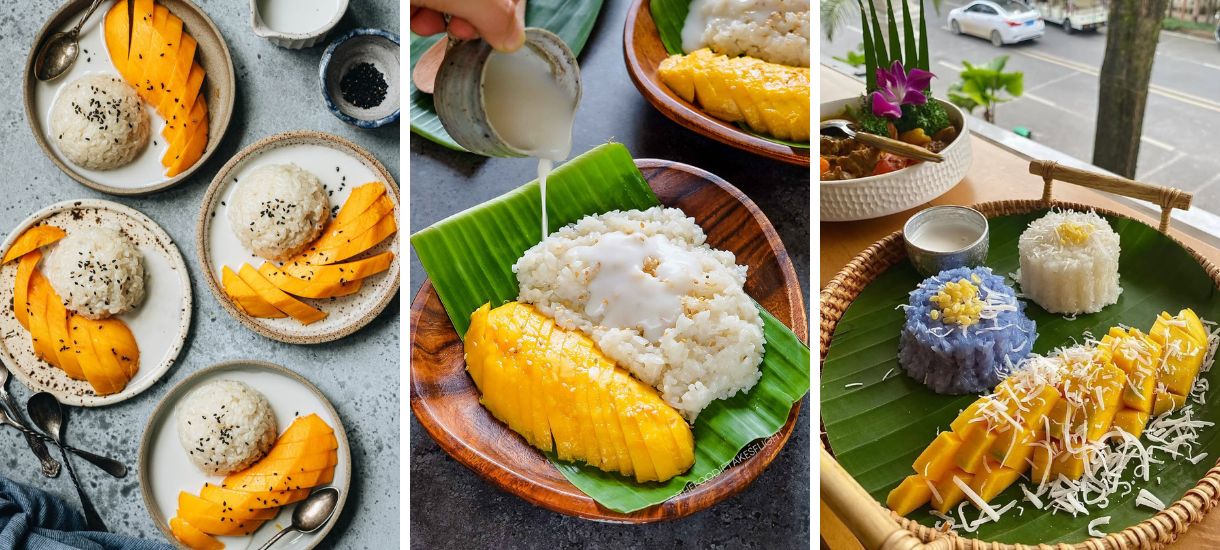
The flavors of mango sticky rice are subtle, sweet, and fresh. Since it is a light dessert, it is perfect for a quick bite when you are on the go. The recipe is also pretty simple and straightforward, making it one of the easier ones to replicate when you return home from your Thailand vacation. If you try to make it, be sure to use glutinous rice. Other types won’t do the trick.
Tom Kha Gai
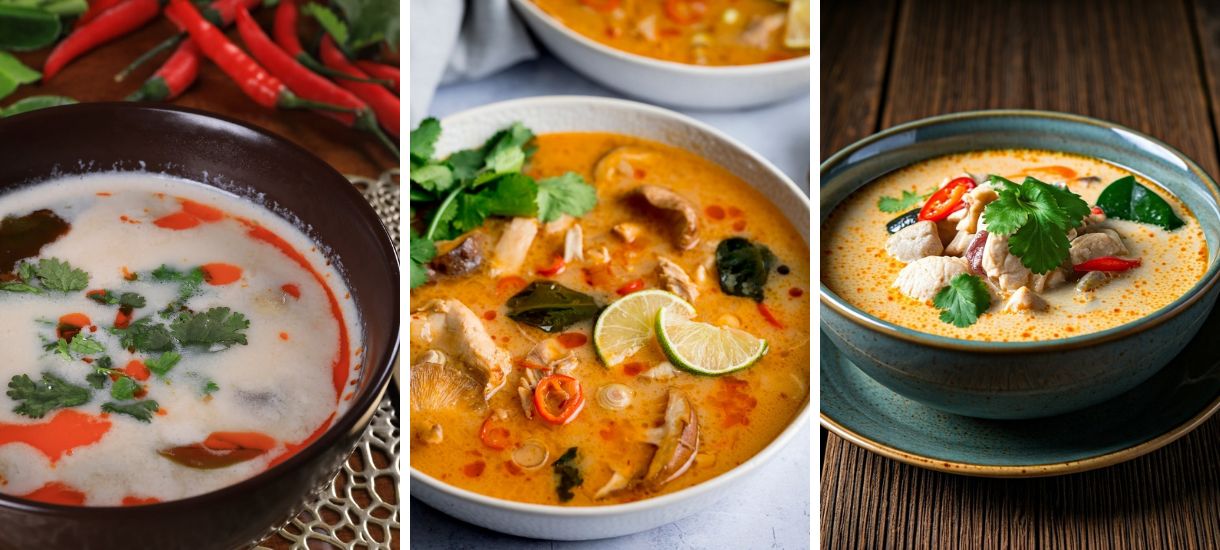
For a creamy soup that isn’t too spicy, try Tom Kha Gai, some of the best mild spicy food in Thailand. The sweet coconut base of the broth has a refreshing flavor thanks to an infusion of herbs. It typically features chicken, but you may find versions that include pork, fish, mushrooms or tofu.
There is a similar soup called Tom Yam that is even more famous, but Tom Yam doesn’t have coconut milk. As a result, it tends to be spicier than Tom Kha Gai.
Along with coconut milk and a protein like chicken or fish, ingredients in Tom Kha Gai include galangal or ginger, lemongrass, lime leaves, coriander or cilantro, Thai chillies, and either shitake or straw mushrooms.
The chillies do add a bit of spice to the soup. But it is typically not too pronounced since the flavor gets diffused into the broth and counterbalanced by the sweetness of the coconut milk. But you can ask for the chillies to be omitted if you don’t want any spice at all.
One more great thing about Tom Kha Gai is that it is gluten-free. So, check for it on the menu if anyone in your group has special dietary needs.
Khanom Krok
As you explore Thai floating markets, you may stumble across vendors selling delightful fluffy pancakes known as Khanom Krok.
If the recipe for Khanom Krok were a love story, the moral would be “opposites attract.” Each little pancake is made by preparing two different batters: a salty batter and a sweet batter.
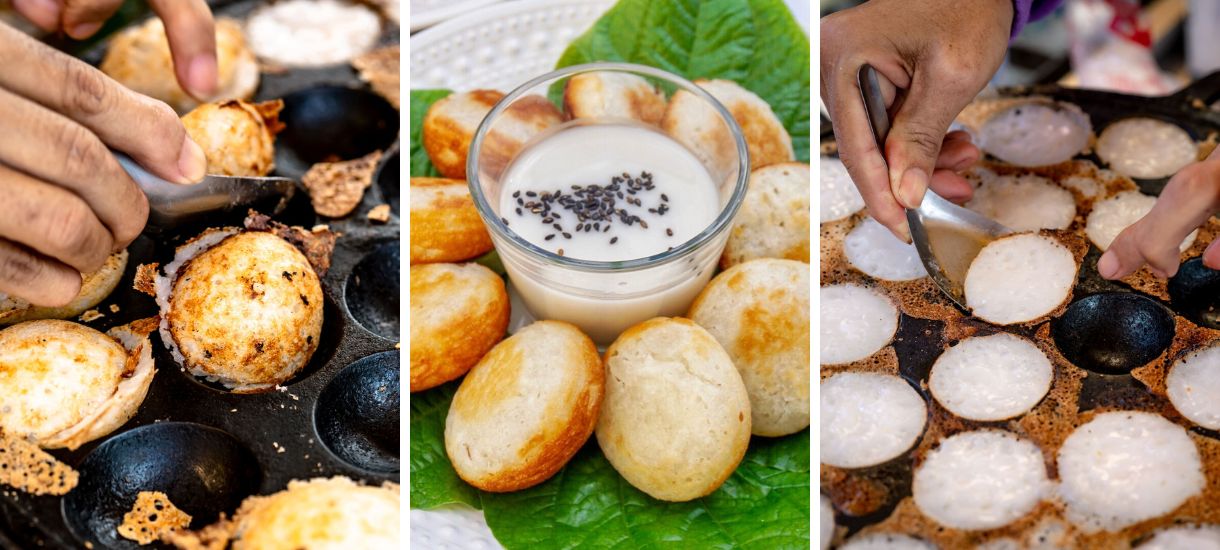
As different as they seem, these two batters were destined to be together, making each complete: the sweet, creamy coconut custard batter becomes the filling, while the saltier batter becomes the crispy outer shell. It’s a match made in heaven with every delicious bite.
Khao Man Gai
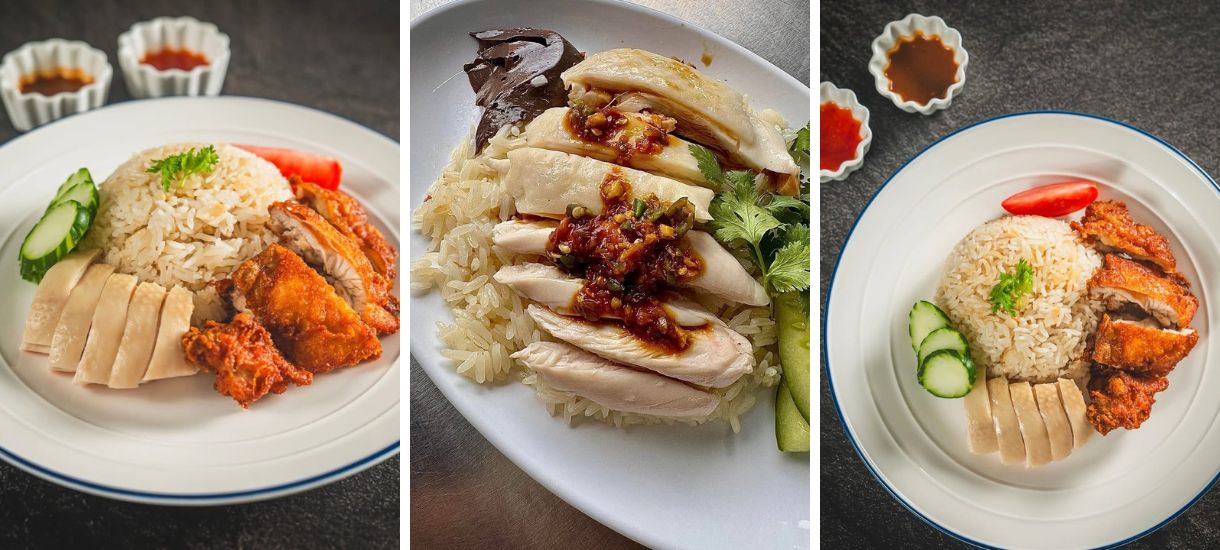
When you’re craving some good, old-fashioned comfort food, you can’t go wrong with chicken and rice. If you’re in Bangkok, you won’t have to walk far to find it. Khao man gai is so popular that pretty much anywhere in the city, you’re likely just a few blocks away from a restaurant or street vendor selling it. Just look for some boiled chickens hanging in a cabinet, and you’ll be on track.
The boiled chicken is served with rice cooked in chicken broth, with garlic and shallots. The dish comes with a sauce made out of soy, vinegar, ginger, soybeans, garlic and chillies. Cilantro and cucumber slices may come with it as a garnish.
The only part of this dish that is at all spicy is the sauce. You can either request milder sauce, or just use less of it when you’re eating.
Pad See Ew
The flat rice noodles in pad see ew have a charred look to them. But don’t let that trick you into thinking they’ve been burned. They’ve actually been caramelised in a wok using black soy sauce. This is what gives the dish its name, which means “fried with soy sauce.”
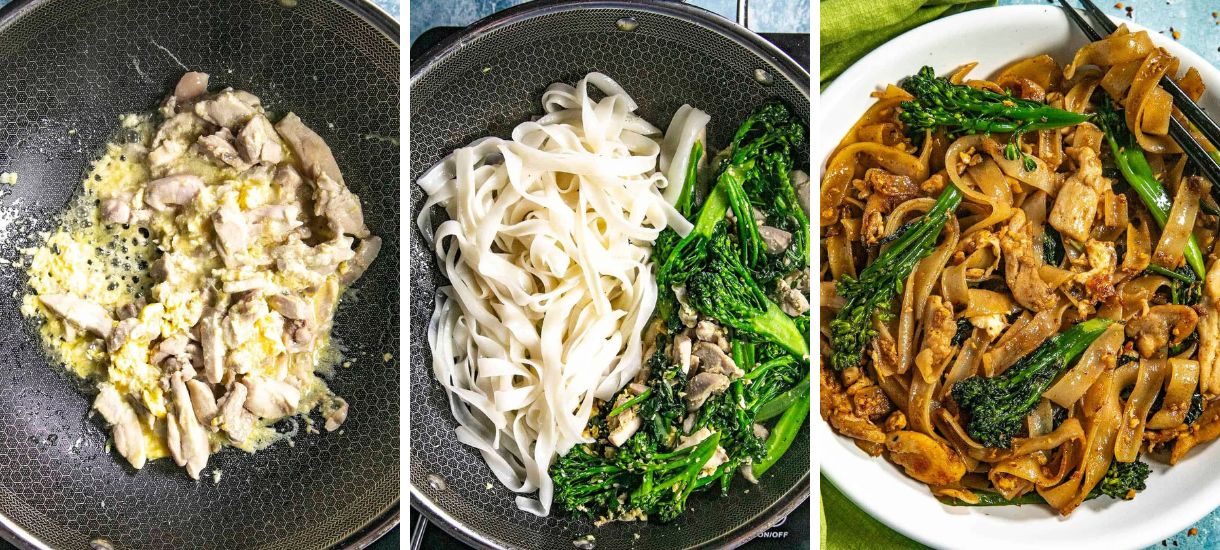
The resulting flavor is bold and smoky, but usually not spicy. Other ingredients that go into this satisfying dish include garlic, ground white pepper, egg, and whatever protein you prefer (chicken, pork, beef, seafood or tofu). Fun fact: the technique for stir-frying the noodles used in pad see ew originally came from China, which is why you’ll find some similar dishes at Chinese restaurants.
Khao Pad Sapparot (Pineapple fried rice)
If you want a savory bowl of fried rice with pops of sweet, refreshing, fruity flavor, you can’t go wrong with Khao Pad Sapparot, pineapple fried rice. This is one of the most celebrated of all non-spicy Thai dishes.
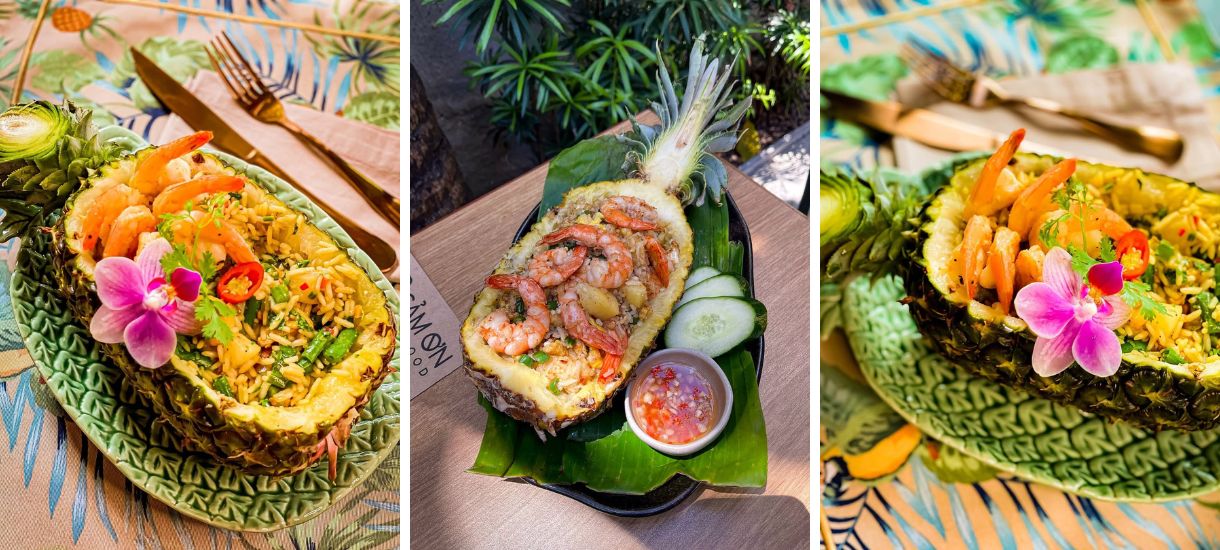
Pineapple fried rice is cooked in a wok or frying pan, and is prepared with coconut oil, soy sauce or tamari salt, and sometimes curry powder. Along with pineapple, egg, and your choice of protein, it features vegetables like bell peppers, green onions, garlic, and cilantro. Another unique ingredient that helps define this dish is cashews, which add a mild nutty flavor and some extra texture.
Sometimes, pineapple fried rice is served in a pineapple shell. Not only is this a fun way to present the meal, but it also adds some extra pineapple flavour. Squeeze on a dash of lime, and you’re ready to dig in.
Massaman Curry
Next on our list of mild spicy food in Thailand is another dish that is popular worldwide, Massaman curry. Eating this curry is like embarking on a culinary tour of the Malay Archipelago, the Indian subcontinent, Persia, and of course, Thailand itself.
Many of the ingredients in the dish are common in Thai foods, like coconut milk, lemongrass, galangal, coriander, chillies, shrimp paste, white pepper, garlic and shallots. But others come from the surrounding region, like cardamom, cloves, cinnamon, cumin, star anise, nutmeg, mace and bay leaves.
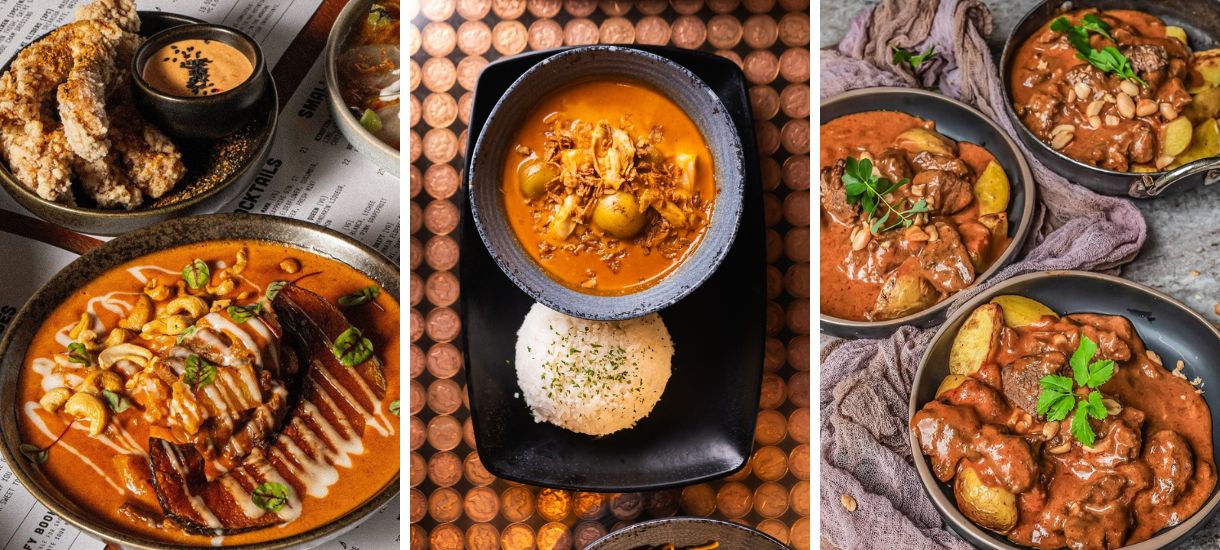
These spices originally made their way to Thailand via Muslim traders. Massaman is a traditional Muslim curry that conforms to halal requirements. As a result, it usually doesn’t feature pork, though you can sometimes request it. Chicken is the most common meat, but it can be served with beef or mutton. Tofu and vegetables are also options for vegetarians.
Khao Kha Moo
Khao kha moo, also spelled khao kha mu, is a pork dish blending Teochew Chinese culinary influences with traditional Thai elements. It’s one of the best non-spicy Thai dishes, and it might just be the ultimate Thai comfort food.
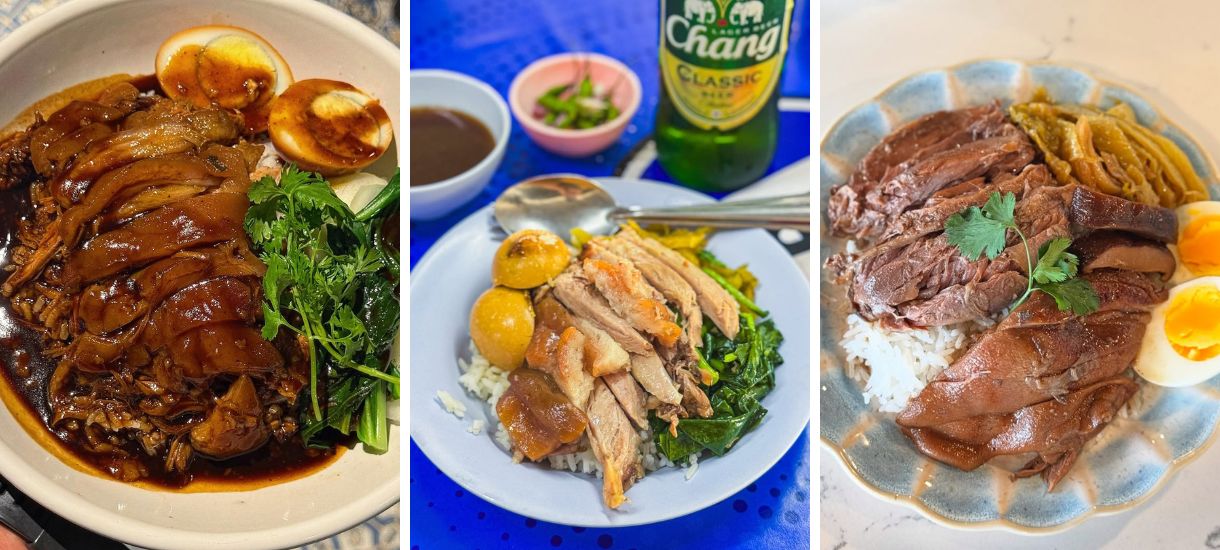
Picture pork so tender it falls apart in your mouth, infused with aromatic spices like cinnamon, star anise and coriander. It rests on a fluffy bed of jasmine rice, and is served with a boiled egg, broccoli, chillies and pickled Chinese mustard greens. Enjoy each ingredient on its own, or mix them all up on your plate. Either way, it’ll be a delicious meal you won’t soon forget.
Pad Thai
If you’ve only ever eaten a single Thai dish in your lifetime, there is a really good chance it was Pad Thai. As one of the national dishes of Thailand, this colorful noodle dish is famous all around the world, a favorite in Thai restaurants.
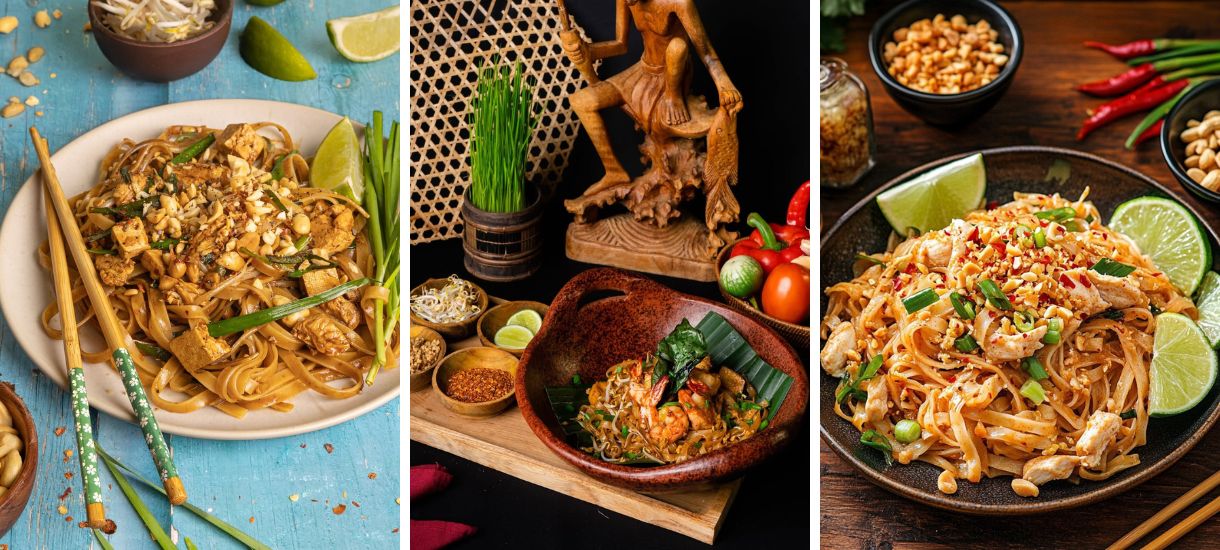
Pad Thai features stir-fried rice noodles originally brought to the country by Chinese settlers, along with shrimp, scrambled egg, green onions, peanuts, bean sprouts, carrots and peppers. The sauce is made by combining garlic, tamarind paste, fish sauce, soy sauce, and rice vinegar.
If you order Pad Thai from a street vendor, you can listen to the wok sizzling as the ingredients are added with just the right timing. When prepared correctly, the noodles will be caramelized by the sauce, imbuing them with flavor. Surprisingly, this national dish is not spicy in itself; it’s often served with chilli flakes on the side to customize the heat tolerance. If you cannot eat spicy food, just leave the flakes out, easy!
How To Order Thai Food With No Spice
Thais enjoy spicy food, but that doesn't mean every dish has to be spicy. Travelers in Thailand can still enjoy delicious dishes, whether they love spiciness or not.
Here is the phrase you can say when you order your food to let them know you don’t want it to burn off the roof of your mouth:
“Mai Pet” (ไม่เผ็ด): “Not spicy.”
The phrase is pronounced “my pet.”
Just want your dish mildly spicy? Here is how you can order that:
“Pet nit noi” (เผ็ดนิดหน่อย): “A little spicy.”
“Nit” sounds the same as “knit,” and “noi” rhymes with “boy.”
If you want to specify leaving out chilli peppers, you can use the phrase:
“Mai sai prik” (ไม่ใส่พริก): “Do not put chilli.”
It is pronounced like “my sigh prick.”
Keep in mind that peppercorn, galangal, and some other herbs and spices can add heat to a dish too.