

How to Navigate Japanese Public Transportation Like a Pro
Find out how to move around Japan safely and effectively in our Japanese public transportation guide. Explore train, bus, and other travel options
One of the delights of visiting Japan is how punctual and efficient public transportation is. The public transit systems can seem complex at first, but once you master them, you’ll find it is quick and easy to move around Japan. In this Japanese public transportation guide, we will break it down for you, making it simple to navigate trains, buses, taxi services and airlines.
1. Using the Japanese Train System
It can feel overwhelming at first trying to make sense of trains in Japan. Should you ride an Express or Semi-Express train? What exactly is a Limited Express train? The names may sound similar, but each type of train in Japan is ideal for different transportation needs.
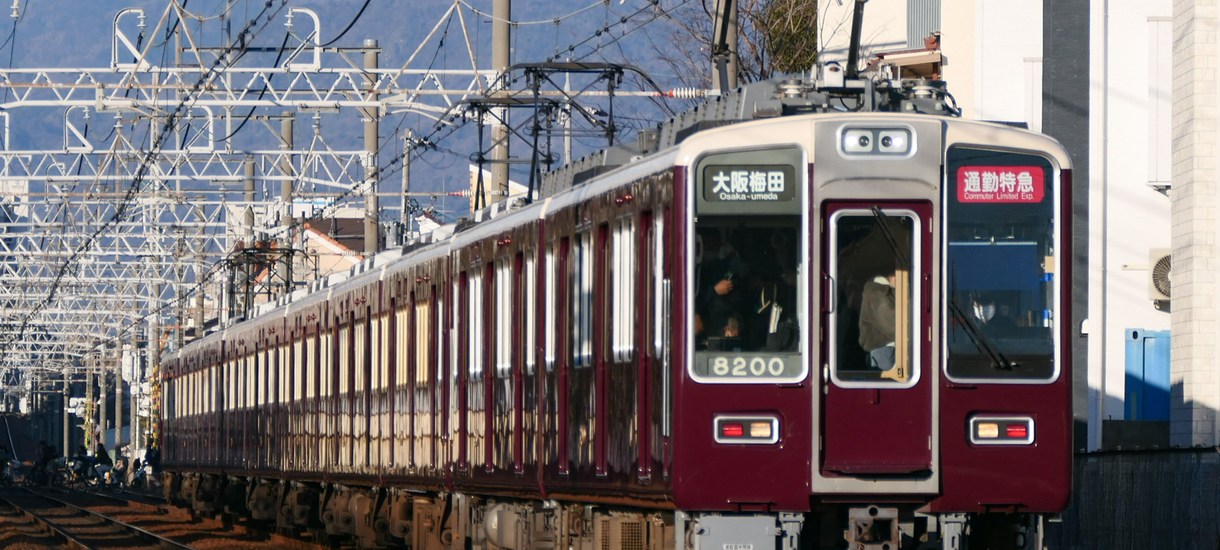
Types of Trains in Japan
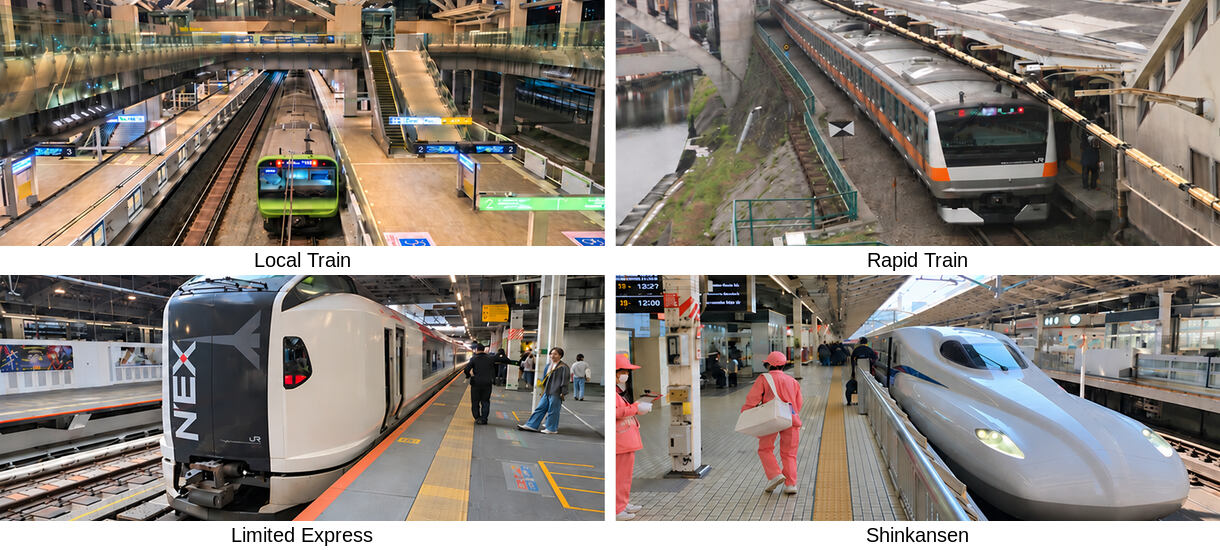
Below are the different types of trains in Japan, ordered from those that make the most frequent stops to those that make the least frequent stops.
· Local: These trains are local to specific cities and make stops at almost every station available. Because of that, it’s not widely used by tourists who need to save time. Popular examples include the Osaka Loop in Osaka, and the Yamanote Line in Tokyo.
· Semi-Express: This type of train normally serves locals who live in the outer suburbs traveling to the city center. Therefore, like local trains, it’s not widely used for tourists unless you stay in a residential area outside the central area.
· Rapid: Rapid trains are the most affordable train for tourists because they skip small stations and connect you to main commercial hubs. It doesn’t even require a special ticket – that’s why it is notoriously crowded during rush hour.
· Express: Express trains are ideal for traveling to mid-range attractions or secondary hubs within a metropolitan area without paying extra.
· Limited Express: This is the primary way tourists reach premium getaway destinations not served by the Shinkansen. For example, you would take the Romancecar to Hakone, the Azusa to Matsumoto, or the Haruka from Kansai Airport to Kyoto.
· Shinkansen: These are the famous Japanese bullet trains that can speed you along the rails at up to 320 kilometers per hour. At that speed, it takes less than three hours to travel between Osaka and Tokyo, which is approximately 515 kilometers. There are 9 JR lines in total running between most of the country’s major cities. A couple of popular bullet trains for tourists include the Tōkaidō Shinkansen, which connects Tokyo, Yokohama, Nagoya, Kyoto, and Osaka, and the Sanyo Shinkansen, linking Osaka with Fukuoka.
Important to Note:
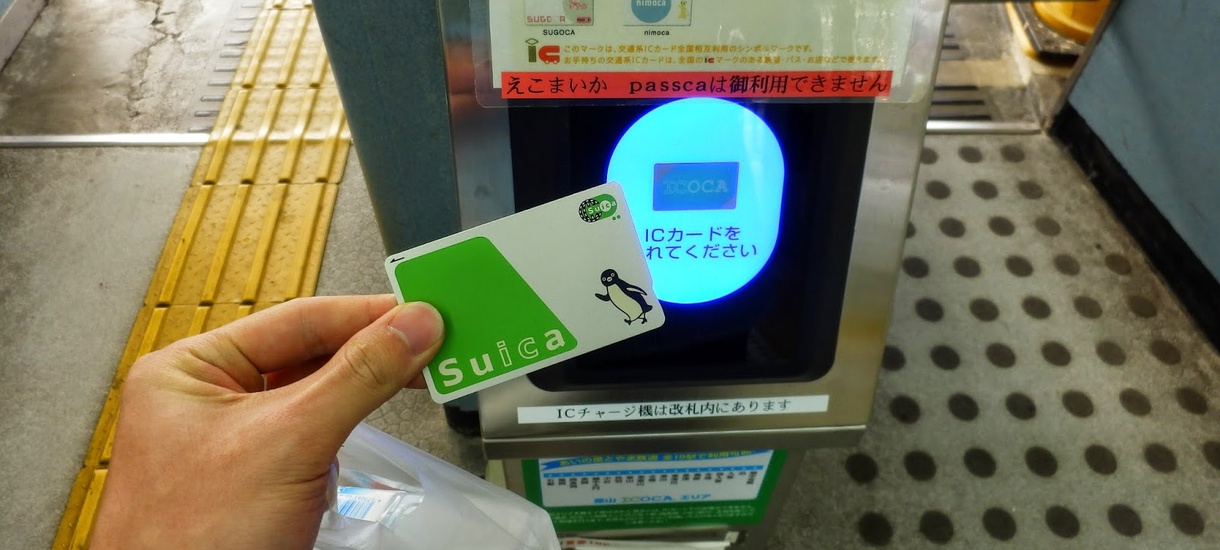
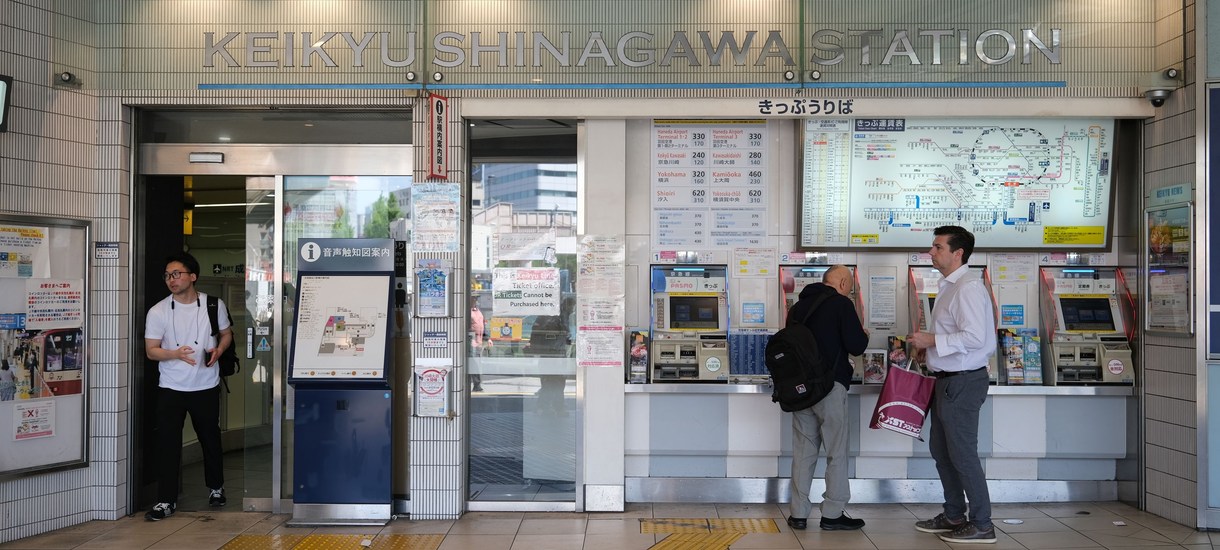
- You can buy train tickets at station ticket machines and counters, and many long-distance journeys can also be booked online. For local trains, buses, and subways, a rechargeable IC card is often the easiest option: tap in and out instead of purchasing a ticket for every ride. IC cards can also be used at many convenience stores, vending machines, lockers, and some restaurants. For popular sightseeing trains and longer-distance services, reserve ahead when possible, especially during weekends, holidays, and peak travel periods.
- You can reserve a Shinkansen ticket online, but not an individual seat. You can only do that at the counter when you arrive at the station. On Shinkansen trains, the Green Car is Japan’s equivalent of first class, and requires a higher fare.
- Always carry yen to buy tickets in person, as not all machines accept credit/debit cards. ¥120-¥400 is typical for local rides. Long-distance rides can cost as much as ¥20,000.
- Most train and subway stations in Japan follow a similar process, whether they are operated by JR, a private railway, or a subway company. Start by choosing your route. Then, buy a paper ticket from a machine or staffed counter (“Midori no Madoguchi”), or use a rechargeable IC card where accepted. Pass through the ticket gate, then wait on the platform behind the yellow safety line.
- If you have a lot of luggage, try to avoid traveling during peak hours, as it can be too crowded for bulky suitcases and bags. Up to two luggage items are free of charge on Japanese trains. The max dimensions are length plus width within 250 cm, and the longest dimension within 2 meters. Weight must be 30 kg or less. No luggage reservation is needed for most trains, but you do need one for Shinkansen trains.
2. How Buses Work in Japan
You may feel puzzled the first time you try to board a bus in Japan, and are gestured to do so at the back. Japan’s bus system is pretty easy to navigate once you understand it though. Let’s start by going over the different types of buses.
Types of Buses in Japan
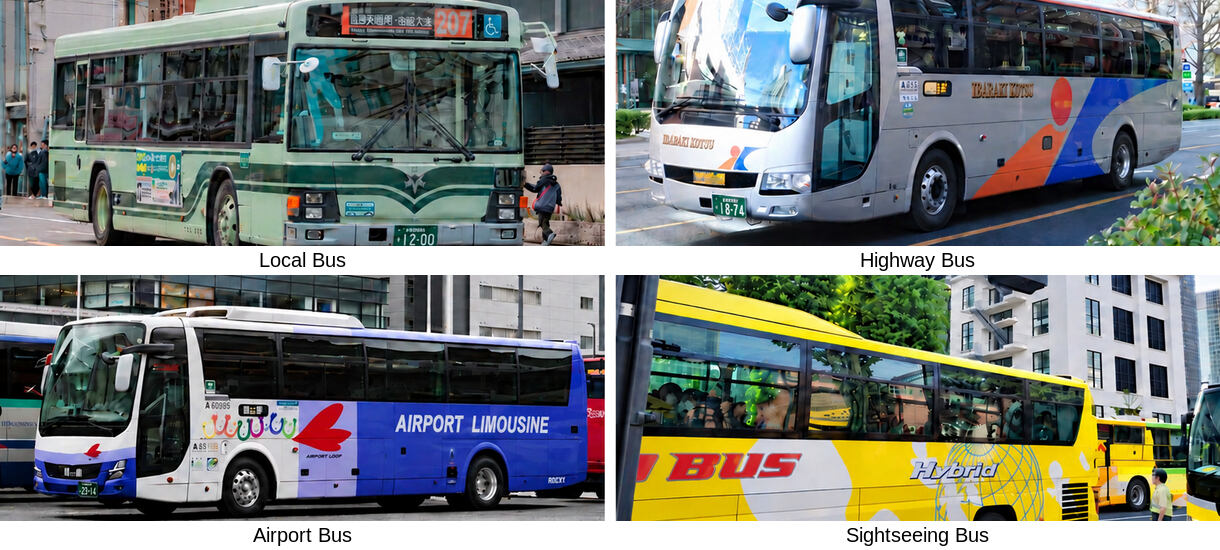
· Local: These buses make frequent stops, and are for getting around within individual cities.
· Highway: Use this type of bus to go from one city to another.
· Overnight: This type of bus operates at late hours, and may cost less than a daytime bus.
· Airport: Use this type of bus for transport between an airport and a city center. As an example, a lot of people use the Tokyo Airport Limousine Bus for transfers.
· Sightseeing: These buses are for tourists, not regular commuters. They travel scenic routes and include commentary from a tour guide. A couple of popular sightseeing buses include the Tokyo Sky Hop Bus and the Hato Bus.
Important to Note:
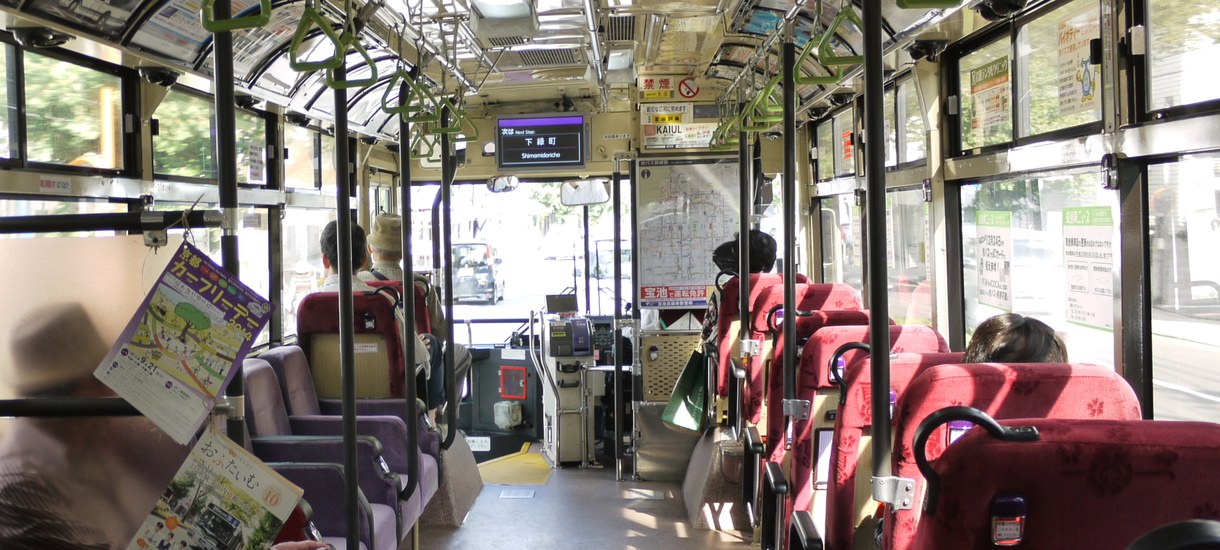
- If you are taking a bus within a city, you’ll usually pay a flat fare when you get on board. The easiest way to pay for bus travel is with an IC card. Cash is fine, as not all rural routes or small operators accept IC cards. Carrying small change will help.
- For buses traveling across longer distances, the fare is based on distance instead. So, you will tap your IC card or take a numbered ticket when you board, then pay with your IC card or cash when you disembark. You can see how much you owe by checking the display screen at the front of the bus where your ticket number is listed.
- You do need to make an advance reservation for a highway or overnight bus. You may have the option of booking an airport or sightseeing bus, but you don’t necessarily have to. It’s still smart to do so during peak season, however, as popular routes can fill up fast.
- Wait in a queue to board a bus. Only after people have finished leaving the bus should you try to board. You board flat-rate buses at the front, and pay before your ride. For buses that charge based on distance traveled, you board at the middle or rear, and pay when you exit at the front.
- Local buses usually have strict limits for luggage to prevent it from getting too crowded on board. Check the rules for the bus you want to use, but expect the limit to be around 10 kg in most cases. You are allowed to have larger luggage on long-distance buses, but again, you should check the policy to find out the restrictions.
- Once on board the bus, it is best to speak quietly or remain silent so everyone can enjoy a quiet, peaceful ride.
- Signs at bus stops are in Japanese. If you need help navigating the bus lines, map websites can help, as can apps like Yahoo! Japan Transit.
3. Getting Around Japan by Taxi
In most big cities, you’ll explore mostly by bus or train. But if you’re visiting a part of Japan with fewer public transportation options, you can fall back on taxi services. A lot of train and bus lines also stop operating late at night, leaving taxis as an alternative.
Important to Note:
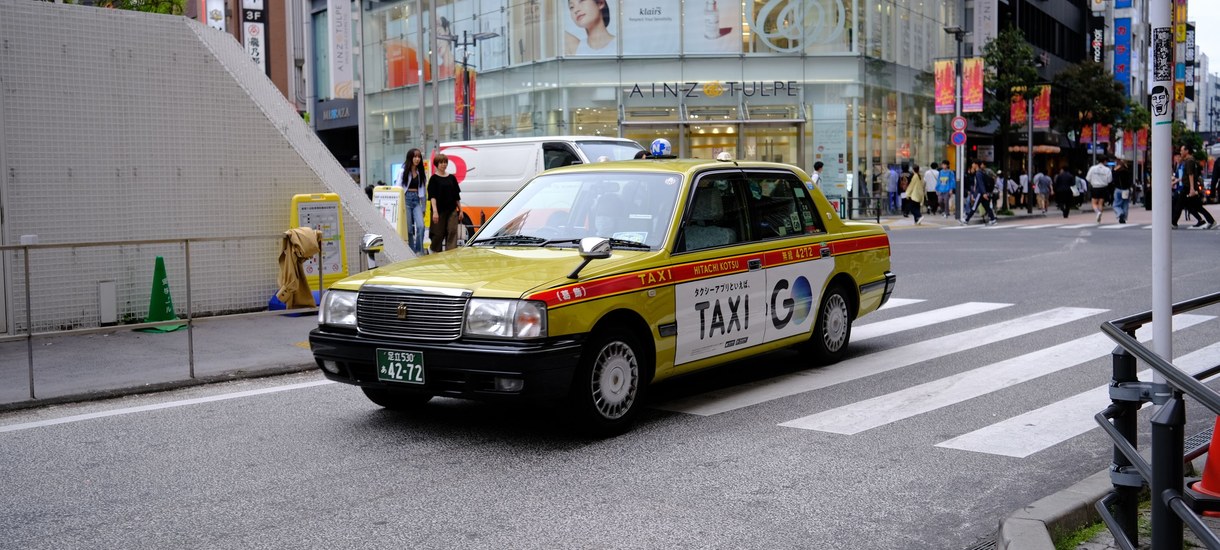
- You can call to hail a taxi, or go to a taxi stand at a train station to find one. If you see one passing by, you can also try to flag it down on the street. If you look at the dashboard, you should see a plate that is either red or green. If it’s red, it may be available. If it’s green, it’s occupied.
- Check if the license plate is green. That means it is a licensed taxi.
- Wait for the taxi driver to open the door for you. You’re not supposed to open or close it yourself.
- You can usually pay with a credit card or cash. Some taxi drivers may let you use an IC card.
- Taxis are most cost-effective for trips under 2 kilometers. After that, the rate tends to climb. They also cost more on expressways, or late at night or early in the morning.
- Ride-sharing was illegal in Japan for a long time. In some locations, including Tokyo, Kyoto, Kanagawa, and Aichi Prefectures, ride-sharing is now allowed, but only when there is a shortage of taxis. You can access services like Uber in Japan, but they usually function as taxi-hailing apps, not regular ride-sharing as they do in other countries. Coverage for ride-sharing apps is best in Tokyo, followed by Osaka.
4. Japanese Airports and Airlines
Last but not least, you will likely be flying into Japan, and might also take some domestic flights around the country. Here is what you need to know about Japan’s airlines and airports.
Main Airports in Japan
Some of the most popular airports in Japan include:
- Narita (NRT) in Tokyo
- Haneda (HND) in Tokyo
- Kansai (KIX) in Osaka
- Fukuoka (FUK) in Fukuoka
- New Chitose Airport (CTS/RJCC) in Sapporo
- Naha Airport (OKA/ROAH) in Okinawa
- Osaka International Airport (ITM/RJOO) in Osaka
- Chubu Centrair (NGO) in Nagoya
You probably noticed there are two major airports in Tokyo, Narita and Haneda. If you want to land as close to central Tokyo as possible, you should choose Haneda for its convenient location. As for Narita, it may be further away, but it has a wider variety of international routes compared to Haneda. That includes some budget flights that do not land at Haneda.
So, neither airport is the “best” for every single situation. It really comes down to what you need as an individual traveler.
Popular Airlines
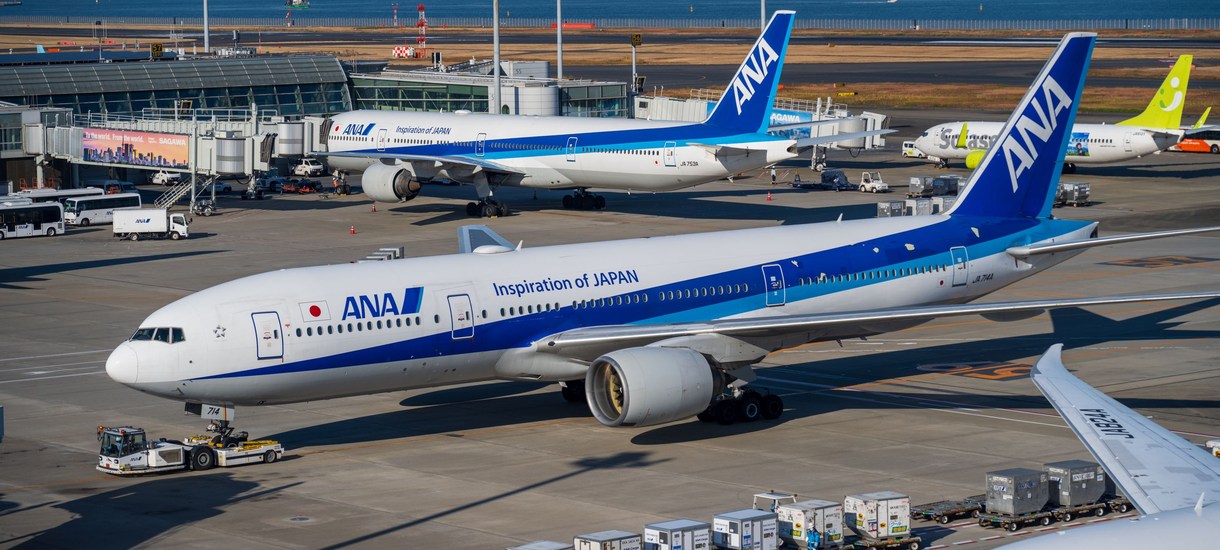
Some of the most popular airlines for flying to Japan include Japan Airlines, All Nippon Airlines, Singapore Airlines, and Delta Airlines. Japan Airlines and All Nippon Airlines are also top choices for domestic flights.
Important to Note:
- Entry procedures to the country can be pretty complex and time-consuming. Between deplaning, customs, quarantine checkpoints, baggage claim, and other entry procedures, it helps to plan in some buffer time when you make your bookings.
- You may want to download the Visit Japan Web app before you arrive at the airport. It speeds up the customs process considerably by letting you skip paper forms. You’ll need to complete a 15-minute declaration, then generate and save the QR code. You can either keep it on your device or print it. You’ll scan it when you get to the electronic customs gates at the airport, along with your passport.
- Airports like Narita offer free wifi in the terminals. You may also find wifi networks in coffee shops or on terminal shuttle buses. At the counter in the airport, you can sometimes rent pocket wifi.